• Skip to main content
  • Skip to primary sidebar

Patti Cotton

Executive Coach & Career Strategist

  • About
  • Consulting
  • Training
  • Speaking
  • Blog
  • Contact

team

Why You are Responsible for Your Team’s Performance

June 17, 2020 By Patti Cotton Leave a Comment

Why You are Responsible for Your Team’s Performance
Image Credit: Shutterstock

Many is a time when I have heard a leader say, “I just can’t get that executive to do the job I hired them to do!”

If you find you continue to complain about the performance of one or more of your own executive team members, it’s time to look in the mirror for the answer.

Because the key lies in one of three areas that you own.

You are responsible for setting the direction.

Jim, president of a large financial services organization, was frustrated.

“We are a tired company, Patti,” Jim told me. “And it really shows up in the executive team.”

“Tell me more, Jim,” I said. “What are you seeing on the team that tells you they are tired?”

“Samantha isn’t staying on top of the performance of her department. She keeps telling me that they are doing the best they can. Marc doesn’t meet deadlines anymore. He says his workload is heavy and that we need to reevaluate – or get him an assistant. I don’t know. It seems like people are distracted and disengaged.”

“So, when was the last time that you called a meeting to review your vision and direction?”

“Patti, we do strategic planning with the board every year,” Jim answered. “It’s not like we aren’t on top of where we need to be in 3-5 years.”

“That’s a great start,” I said. “But what do you do from there? I’m thinking your team may have lost their sense of purpose. By what you describe, the direction is either not exciting enough, or they don’t see how it relates to their work.”

“I don’t understand,” said Jim.

“Well, you may have a strategic plan, but your team needs to understand how this will make impact on your community, on the world. And then, they need to understand how their part in this plan will contribute to that success. Otherwise, you will have a group of people who will not recognize the relevance of their work to the bigger picture. You’ll wind up with a bunch of executives that have lost their purpose.”

Jim and I met with the team for some discussions and it did indeed become clear that they needed to reanimate their sense of purpose. Over the following days, we worked to do this and came away with a stellar action plan for the next 12 months that excited and inspired the team.

Some months later it was good to see that this had helped reignite the team. The organization went on to capture additional market share, which motivated the team to author an aggressive growth plan.

As a leader, be sure you are setting direction for your team and helping them to see the relevancy of their roles and responsibilities to this larger picture.

You are responsible for determining the norms.

Team norms are the rules or operating principles that shape team members’ interaction. It’s the agreed-upon way that team relates, gets the work done, and what team members can expect of one another.

Doug called me after their company had just lost a huge government contract.

“I don’t know what’s wrong with this team,” he said. “We are making poor decisions because we get into the weed so quickly. I get cut off at the pass when I mention a new idea. These are talented people – but we need to do something different or we will keep losing contracts with this kind of mess.”

“Doug, it sounds like you could benefit from determining a better process for making decisions – an agreement on the way you go about this. We would call that a team norm around decision-making.”

“I don’t care what you call it,” Doug shot back. “I just need for them to be open-minded about new ideas.”

“Go on,” I responded. “What else?”

“Well, I’d like for them to stay in the conversation at a strategic level until we agree on a direction. We can get into the tactics and details after that.”

“You just described two team norms around decision-making,” I answered. “Sounds like we need to have a meeting with your executives.”

We actually worked with the executives all morning to identify several key team norms. Decision-making was first, and it seemed to be welcome. But we then hit a major nerve around trust. We spent a couple of hours on this, determining what the team members needed in order to trust each other at a greater level. Not surprising – this is where I spend a lot of my time when rebuilding or reigniting team. We dealt with things like holding confidences, listening to understand, managing conflict, and more.

The morning was emotional but rewarding. The task was then to incorporate these norms or behaviors, which was something we worked on over the ensuing months.

Doug called me the year following to report that they had increased their revenue significantly due to the team’s new ability to innovate and their heightened trust.

“I didn’t know trust had an ROI,” he joked. “But I am a believer, now!”

As a leader, it’s your job to lead identifying and integrating norms for your team.

You are responsible for holding your team members accountable.

Diane reached out to me when she was ready to terminate two executives.

“I’ve had it, Patti,” she said. “They are at each other all the time. It’s not always apparent, because they are passive-aggressive. But they undermine each other in subtle ways, and actively try to downplay each other’s part in our success. The problem is, they are both so talented. And it’s hard to retain great talent.”

“You are right, Diane,” I said. “Finding and retaining top talent is challenging. And you are looking at many costs – overt and hidden – to the company, if you have to terminate them.”

“They wear me out,” said Diane. “I’m embarrassed to tell you that I’ve lately begun to tune them out whenever one of them begins to speak. I’m sure it shows.”

“Well, let’s talk about what we can do,” I responded. “When was the last time you held them accountable for their actions?”

“I met with them separately about 6 months ago and told them flat out that I expected them to get along.”

“Did that work?” I asked.

“No,” Diane answered. “It calmed down for a bit, then began to flare back up about 6 weeks ago.”

“So what did you do when that happened?” I asked.

“Frankly, I ignored it. I was so frustrated that I just didn’t want to think about it.”

“Diane, I know it’s frustrating. In fact, you must be pretty upset by now. If you think about it, their misconduct requiring your focused attention has cost the team an inordinate amount of revenue.”

“What?” she queried.

“Well, yes,” I answered. “Think about the cost of their conflict – of not doing their jobs properly, of having their teams feel the effects of this, and of your having to devote energy to the problem. Conflict has already cost your company wasted time, motivation, and I’m guessing that turnover in their respective areas might be headed upward.”

“So what do I do, Patti?” she asked.

“You own this, Diane. You confront it. The cost of allowing their misconduct has already decreased your company’s productivity and revenue. You hold them accountable.”

Diane admitted that she didn’t like confrontation, but she also realized that it was time to take things in hand.

The result was that one executive decided to leave. The other stayed on and Diane worked with him until he had shifted his behaviors to be supportive and positive of team contributions.

As a leader, you are responsible for holding your people accountable.

Is your team under-performing?

If your team is under-performing, it is probably due to one of these three areas. I invite you to make these areas part of your team discussions to discover your own growth opportunities.

HOW MUCH

DO OTHERS REALLY TRUST YOU?

​Learn the two vital parts to trust and how they can help you become a more highly effective leader.

GET THE INFOGRAPHIC


© Patti Cotton and patticotton.com. All rights reserved. Unauthorized use and/or duplication of this material without express written permission from the author is strictly prohibited. Excerpts and links may be used, provided that attribution is made to Patti Cotton and patticotton.com, with links thereto.

Patti Cotton

Patti Cotton reenergizes talented leaders and their teams to achieve fulfillment and extraordinary results. For more information on how Patti Cotton can help you and your organization, click here.

Keeping Your Team Energized in a Fast-Changing Environment

June 10, 2020 By Patti Cotton Leave a Comment

Keeping Your Team Energized in a Fast-Changing Environment
Image Credit: Shutterstock

You don’t know how powerful your executive team truly is until they are put to the test in extreme conditions.

It doesn’t take a single event to create this kind of scenario. We are in now in a fast-changing environment full of twists and turns that keeps conditions extreme.

How do you keep your team energized and engaged so that you can flex and pivot with ease?

Help normalize fear.

“My CFO has checked out,” Sam said. “As hard as it is to think about, I feel it’s time to replace him.”

“Mark has been with you for years,” I said. “What are you experiencing that makes you think you need to replace him now?”

“He doesn’t speak up in meetings. He holes up in his office. The other execs are asking if something is wrong with him,” said Sam. “The last thing I need is to drag him around by my ankle.”

“Sam, Mark has shouldered many changes with you in this business,” I offered. “Don’t you owe it to him to have a deeper, thoughtful conversation about what you are seeing, rather than to just chalk it up to disengagement?”

Sam did talk with Mark. And here’s what he found: Mark was afraid. He admitted that in light of the pandemic and its effect on the marketplace, he felt “frozen in place.” It was hard to think, to make decisions. Mark was feeling alone and paralyzed.

Later, Sam recounted, “And here is what I told Mark: Mark, I’m here. Yes, this is crazy and we don’t have a roadmap. I’m so sorry you have felt alone with this. Why don’t we meet for the next few mornings and talk through where we think we need to pick up in your area of responsibility?”

“Sam, you gave Mark a great gift,” I responded. “These are unprecedented times. Having you recognize where he is, that it’s okay to feel that way, and that you will be on hand to work through this with him.”

“Well, Patti, thank you,” Sam said. “Truthfully, I should have thought to talk with him much sooner. Guess I was wrapped up in my own stuff. And really, to replace Mark would have been challenging for so many reasons – and evidently, unnecessary.”

Ferret out denial.

Cindy recognized that Jim had been making excuses for many weeks, now. He was missing key deadlines and behind on other projects. Each time she confronted him, he chalked it up to the pandemic and unforeseen developments. I urged Cindy to inquire as to what he was working on since he was held up in these areas.

“Patti, I found out that Jim has been focusing on a couple of initiatives that are really back-burner for us,” she reported later. “And when I asked him how he thought this might help us get ahead, he couldn’t answer me. Seems he has been keeping himself busy on things that really don’t matter. And I have just discovered that there are several things he could have been working on that would have helped us at this time. Now what?”

“Cindy, it’s not unusual to go into denial about things when the going gets tough,” I answered. “Jim appears more comfortable focusing on easier initiatives.”

Cindy went back to Jim and had a pointed, but supportive conversation about priorities. She asked him if he had what he needed in order to move forward. After reviewing things with her, Jim sheepishly admitted that he did.

“We’ve agreed to meet a couple of times weekly until we feel things are firmly on track,” Cindy shared. “I’m not sure why this happened.”

“Cindy, when crisis occurs, the stress can be great. Going into denial by carrying on ‘business as usual’ feels comfortable. Unfortunately, it doesn’t meet the company needs. At the same time, when events such as this pandemic take place, it’s important to huddle a bit more closely and offer support – more than usual. You have a good executive in Jim. And it sounds like you have figured out how to get him moving.”

Identify roadblocks to learning.

“I can’t wait till things get back to normal,” the CEO said. “I’m having a tough time making decisions that work for the current crisis.”

“May I suggest that you may have to acquire some flex in the way you are making decisions,” I countered. “I promise you that we are headed into new territory and that we are not turning back.”

When Harrah’s Entertainment CEO Gary Loveman talks about the difficulty successful executives face in learning, he often quotes from a 1991 Harvard Business Review article by Chris Argyris: “Because many professionals are almost always successful at what they do, they rarely experience failure. And because they have rarely failed, they have never learned how to learn from failure.”

Learning new ways to do business in order to respond to changing conditions is necessary. Yet many top executives feel that “once we get over this hump,” that things will fall back to normal. Untrue.

We are already seeing changing customer demands, rapid transitions in the workforce and how it operates, shifting regulations, and more. All this requires that we learn how to do business differently.

The question is not therefore, “When will things get back to normal so that we can breathe easily?” Instead, it is, “What are we learning from this and what skills and abilities do we need to acquire in order to meet the ‘next normal’?”

Where do you need to grow in order to meet the next normal and thrive?


© Patti Cotton and patticotton.com. All rights reserved. Unauthorized use and/or duplication of this material without express written permission from the author is strictly prohibited. Excerpts and links may be used, provided that attribution is made to Patti Cotton and patticotton.com, with links thereto.

Patti Cotton

Patti Cotton reenergizes talented leaders and their teams to achieve fulfillment and extraordinary results. For more information on how Patti Cotton can help you and your organization, click here.

Are You Playing Favorites on the Executive Team?

May 27, 2020 By Patti Cotton Leave a Comment

Are You Playing Favorites on the Executive Team?
Image Credit: Shutterstock

It’s natural for us to favor some personalities more than others. When we feel a comfortable energy and alignment, it makes conversations and common experiences flow. No doubt, you have one team member with whom you hit it off more easily than others.

Then, there’s “that other one” on the team with whom things seem a bit more stilted. You feel a small undercurrent of resistance or tension when they bring forth ideas. You don’t enjoy conversations with them, and you find yourself dismissing their contributions.

These relational dynamics can give the impression that you are playing favorites (and maybe you are!). And this damages your team’s ability to work best together. Because if you are noticing your bias, so are they.

What do you do?

1. Get perspective.

Talk to a mentor or colleague outside of the team and check your intolerance. Allowing someone you trust to give you some outside perspective might help you to flush out hidden biases that need reconciling on your part.

2. Shift your focus.

Find things you appreciate about the person. Begin to look for ways you appreciate this team member on a personal and professional basis. Notice unique qualities she contributes. Ferret out ways he lends positively to the team or outcomes. This will help you rebalance your view of the team member.

3. Build bridges.

Begin to call on your “unfavored” team member first when asking for opinions in meetings. Chances are, if they have not been speaking up, you haven’t been encouraging it. Think about instituting individual coffees or breakfasts with your team members, and be sure to start with this particular team member. Seek to identify projects and other discussions which will allow you more face time with them so that you can practice engaging differently with them.

Finally, remember that as leader, you are the role model for the team and, in turn, the rest of the organization. Making the conscious decision to turn a problem into an opportunity can only be a great learning lesson, and a win for all of you.


© Patti Cotton and patticotton.com. All rights reserved. Unauthorized use and/or duplication of this material without express written permission from the author is strictly prohibited. Excerpts and links may be used, provided that attribution is made to Patti Cotton and patticotton.com, with links thereto.

Patti Cotton

Patti Cotton reenergizes talented leaders and their teams to achieve fulfillment and extraordinary results. For more information on how Patti Cotton can help you and your organization, click here.
Why Your Talented Team Member Won’t Speak Up

May 6, 2020 By Patti Cotton Leave a Comment

Why Your Talented Team Member Won’t Speak Up
Image Credit: Shutterstock

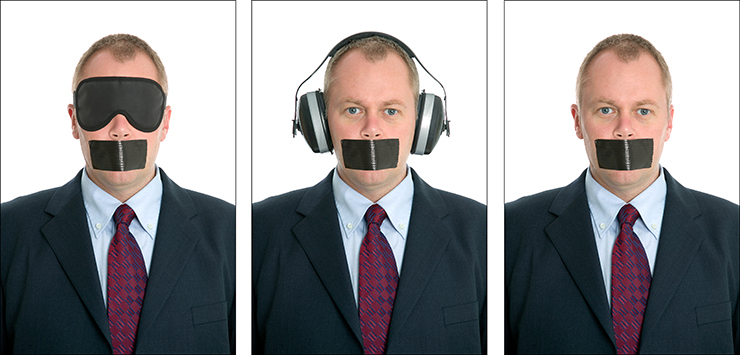
Do you have a team member who has great talent but won’t speak up to contribute? There are several possible reasons why.

And the bottom line is if your team member won’t speak up, you are losing revenue and momentum – simply because he isn’t adding the value he could.

What can you do?

Let’s take a look at five different executive teams in the following scenarios. Each had at least one team member who wasn’t speaking up. Do any of these cases sound familiar to your own team’s situation?

Jim and the So-Called Expert

Jim has been CMO for a year, now. He has an impressive track record and an uncanny sense of what to anticipate in order to serve customers. In his one-on-one meetings, Jim shows great strength in strategizing. But when he gets into the executive team meetings, he simply shuts down. His CEO is frustrated. If Jim keeps quiet, the team isn’t able to benefit from his expertise and perspective.

“Sandra’s the self-proclaimed expert on our team,” Jim explains wryly. “As CFO, she has decided she’s the person with the organizational ‘eye.’ Whether she knows what she’s talking about or not, she will weigh in and do it first. Others may jump in and play – but I’m just not willing to do that. If someone wants my opinion, I guess they will ask me.”

Samantha’s Intolerance for Poor Arguments

The executive team wonders if Samantha is really happy at the company. She starts to speak up but shuts down quickly when the team wants to move toward a solution. Samantha is becoming disengaged and it shows. Her CEO is worried. “I need a CIO who can wrap her arms around problems and run with the solutions,” she says.

Samantha has another view on this. She says, “Quite simply, the executive team is lazy. They always settle for less – the path of least resistance. Every time I suggest doing some outside research to see what others are doing, they snuff me out. I’m tired of contributing to inferior arguments for poor solutions. Why doesn’t our CEO take Samantha aside and give her some coaching on this?”

Bill and His Need for a Business Case

Bill speaks up at times and shuts down at others. His team members wonder which Bill is going to show up today – the one who contributes, or the one who seems to mentally check out at odd points in meeting discussions. Bill’s CEO wonders why Bill dips in and out of discussions.

Bill himself says he gets quiet when he can’t figure out how certain decisions impact the larger picture. “Sometimes the team seems to get into discussing pet projects that don’t really support the business imperative we set for this year,” he says. “I have a hard time hanging in there when it doesn’t make sense to the larger picture. Why doesn’t our CEO stop it and get us back on track? He lets this stuff go on forever and our meetings become pretty ineffective.”

Dani the Divergent Thinker

“Dani’s a bright leader whose best days are yet to come,” said her CEO. “But I can’t figure out why the rest of the team gets frustrated with her when discussing certain topics. I’ve been waiting for her to figure it out. Or for them to all work it out. But it’s not happening.”

Dani has additional light to shed on this. “My team is very structured in its conversations,” she begins. “The members seem to be ‘convergent thinkers,’ and they follow a very tight process to arrive at solutions. Don’t get me wrong – we need to come to some quick decisions in this current environment. But I’m a ‘divergent thinker’ and need to free-flow a bit to come up with best solutions. I’m pretty frustrated that when we are looking to innovate, my contributions seem to be perceived as getting us off course. I simply shut down when that happens. I wish my CEO would check in with me – surely he sees that I’m not participating?”

Jan Wants Better Decision-Making

Jan is perceived as “dead weight” on the executive team. Her credentials and expertise are impressive, but she doesn’t contribute her wealth of knowledge to the team’s benefit. She used to speak up, but took what seemed to be an argumentative tone which deterred others from entering into conversation. She now defers to others on the team without really contributing. Her CEO wonders if she simply doesn’t know how to get along with others.

“I have become tired of being perceived as contrary,” Jan shares. “In my last position with another company, we prized bantering back and forth with different perspectives on things. No one took it as arguing; rather, they enjoyed turning issues on their proverbial heads to examine all sides. The result was a rich outcome. We enjoyed it. Here, it appears I’m just arguing. I wish someone would be real enough to talk with me about it – and to entertain another possibility besides seeing me as antagonistic. Perhaps it’s my tone. I wish my CEO would give me feedback, but she acts like she doesn’t see it.”

And what about the talented, but quiet team member on your own team? What’s his or her side of the story? If you are in charge, it’s time for you to work on how your team can work together to resolve this. The loss is too great to let this go – and the ROI once you bring this to resolution too great to leave on the table.


© Patti Cotton and patticotton.com. All rights reserved. Unauthorized use and/or duplication of this material without express written permission from the author is strictly prohibited. Excerpts and links may be used, provided that attribution is made to Patti Cotton and patticotton.com, with links thereto.

Patti Cotton

Patti Cotton reenergizes talented leaders and their teams to achieve fulfillment and extraordinary results. For more information on how Patti Cotton can help you and your organization, click here.

Strengthening Culture with a Remote Workforce

April 22, 2020 By Patti Cotton Leave a Comment

Strengthening Culture with a Remote Workforce
Image Credit: Shutterstock

How do you retain your company culture when you have a remote workforce?

Retaining who you are and what is important to you as a company is more challenging when you aren’t in the same physical space on a regular basis.

Yet, many companies with international teams and other remote situations have been successfully enjoying solid culture throughout their organizations for years.

How do they do it?

Intentionality.

The best companies know that culture is what makes or breaks them. Culture defines who you are as a company – your corporate identity. It sets the standard and tone for the way your workforce works together. It’s what gives people a shared identity – team, a sense of belonging. And it’s the glue that holds people together when the going gets tough.

But when people aren’t in the same physical environment on a daily basis, adopting and sharing the same tone and standards in thoughts, behaviors and actions can be challenging.

A remote or hybrid environment calls for being more “on purpose.” And this is not a bad thing. Many companies have lost their culture because they have simply taken it for granted. Setting intentionality is what will revive this, whether there is a remote component to your workforce or not.

Here are some things to consider as you seek to reinforce culture with a remote workforce.

1. Add virtual ways to share the company story and tell it often.

As you revisit your values, norms, and priorities in light of considering a remote and hybrid workforce, realize that the way you do things may change, but it doesn’t change who you are and what you stand for. At the same time, you will want to seek to make your company story memorable in creative ways more frequently and in different ways to emphasize identity. Look for seminal touchpoints to share this, such as announcing company-wide changes, annual meetings, company marketing collateral, and key celebrations. Include virtual ways to strengthen this, such as online meetings, video interviews and story markers in communications and at the bottom of email messaging, shared drives, and chat mechanisms.

2. Define what it means to live company values.

Most companies outline their values, but they do not take the time to define what these look like in action. For example, if one of your company core values is creativity, what should that look like in behaviors, actions, work, relationships, outcomes, etc.? You and your executive team should be firm on what all of your core values look like in action. Further, take the time to discuss what these might mean and how they might show up in a virtual or remote setting. Test these thoughts with your employees for feedback and buy-in – this is key. Then decide how you can weave this into your communications, your meetings and other touchpoints, and how to integrate this into your performance standards.

3. Communicate with greater intention.

This means not only increasing your communication, but heightening the way that you connect, such as using video when touching base virtually. Be sure that you set expectations around your communication methods and protocols so that this becomes part of your shared “way of operating.” Place greater emphasis on culture during your onboarding of new employees and leave time for discussion around this. Consider building in an accountability component for the direct supervisor of a new employee, ensuring that they have discussions around what your cultural markers are and how they show up in and at work. Devote intentional time for listening to the employees as well, especially in virtual meetings. Take the pulse on what their challenges are, what they are learning, and opportunities they see for improvements and working better together.

4. Reinforce the importance of each employee’s part in the company community.

Help your employees feel known and part of the team and help them to see how they fit into the bigger picture. Systematize some teambuilding exercises that help everyone to get to know them personally and vice versa, and that identify gifts each brings to the table for greater outcomes. A sense of inclusion and contribution is paramount. Be sure to capitalize on ways to recognize employees in both face-to-face and virtual settings for visibility, appreciation, and teambuilding. Consider cross-training or mentoring with different people to get to know others more rapidly across teams.

In your planning and process to define, strengthen and reinforce culture, please also remember that including your workforce in discussions at key points in various ways will pay great benefits. Allowing the entire employee base to give input means that they will also feel ownership and responsibility for the outcomes.


© Patti Cotton and patticotton.com. All rights reserved. Unauthorized use and/or duplication of this material without express written permission from the author is strictly prohibited. Excerpts and links may be used, provided that attribution is made to Patti Cotton and patticotton.com, with links thereto.

Patti Cotton

Patti Cotton reenergizes talented leaders and their teams to achieve fulfillment and extraordinary results. For more information on how Patti Cotton can help you and your organization, click here.

  • « Go to Previous Page
  • Page 1
  • Interim pages omitted …
  • Page 4
  • Page 5
  • Page 6
  • Page 7
  • Page 8
  • Interim pages omitted …
  • Page 13
  • Go to Next Page »

Primary Sidebar

Patti Cotton
Tweets by @PattiCotton
  • About
  • Consulting
  • Training
  • Speaking
  • Blog
  • Contact
Home | Contact | Privacy Policy

© 2024 Cotton Group LLC | PATTI COTTON 360° LEADERSHIP®