• Skip to main content
  • Skip to primary sidebar

Patti Cotton

Executive Coach & Career Strategist

  • About
  • Consulting
  • Training
  • Speaking
  • Blog
  • Contact

opportunities

The Role of Mindset in Leadership Success

July 31, 2024 By Patti Cotton Leave a Comment

The Role of Mindset in Leadership Success
Image Credit: Depositphotos

When it comes to leadership, the importance of mindset cannot be overstated. How leaders perceive challenges, handle feedback, and inspire their teams is deeply rooted in their mindset. A growth-oriented mindset can transform obstacles into opportunities, fostering an environment where both the leader and their team can thrive.

The Struggle

James was the CEO of a mid-sized tech company that had seen rapid growth over the past few years. When he reached out, he had been struggling to maintain this momentum and keep his team motivated. The market was more volatile than ever, and the competition was fierce.

“I’m overwhelmed,” he told me. “I’m not sure about my ability to steer the company through such choppy waters.”

He was convinced that his main issue was external—market volatility and increasing competition. Seeing these challenges as insurmountable obstacles, he felt stuck and unable to come up with effective solutions. His team sensed James’ stress and self-doubt.

The Source

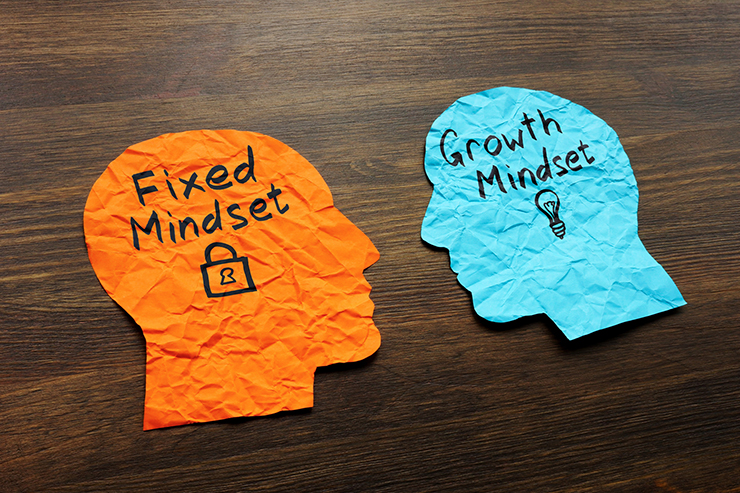
To get to the heart of his struggles, let’s examine James’ mindset. Drawing on Carol Dweck’s research on fixed and growth mindsets, we can see why he would hit a wall.

A fixed mindset assumes abilities and intelligence are static, while a growth mindset believes they can be developed through effort and learning.

James certainly exhibited a fixed mindset.

He saw the current challenges as beyond his control and doubted his leadership abilities were enough to overcome them. This mindset limited his capacity to adapt, innovate, and inspire his team.

This hindered his effectiveness and created a culture of fear and resistance to change. Team members became reluctant to take risks or propose new ideas, leading to stagnation and missed opportunities.

James needed to pivot quickly, or he risked losing his team and his company.

The Strategy

To jumpstart turning things around, we convened off-site for two days to set a vision for his leadership, craft an actionable strategic plan with immediate actions, and do some deeper interventional work to diffuse the origins of his fixed mindset.

We then worked over the next few months to continue cultivating his growth mindset and his abilities to deal with the internal and external challenges that his company faced.

The Shift

James’ team noticed the difference right away, and in the coming weeks and months, their morale and trust rose along with James’ ability to lead and the positive outcomes this produced. It was a pleasure for me to sit in on some of the meetings to observe and support James as he made incremental shifts that made a monumental difference.

How much of a growth mindset do you have? Check yourself here – how do you rate?

  1. I am confident and at ease in embracing challenges.
    • I view challenges as opportunities for personal and professional development.
    • I encourage risk-taking and innovation within the team.
  2. I appreciate learning from constructive feedback.
    • I use constructive feedback as a tool for growth rather than a personal attack.
    • I create an open environment where feedback is welcomed and valued.
  3. I persist in the face of setbacks.
    • I develop resilience by learning from failures and persevering through difficulties.
    • I share stories of past challenges and how they were overcome to inspire the team.

Here are some tips to foster a leader’s growth mindset:

  1. Practice Mindfulness
    • Engage in mindfulness practices such as meditation to increase self-awareness and emotional regulation.
    • Mindfulness helps leaders stay present, reducing stress and improving decision-making. Sarah can start her day with a brief mindfulness session to center herself and approach challenges with a calm and focused mind.
  2. Continuous Learning
    • Commit to lifelong learning by regularly reading books, attending workshops, and seeking new experiences.
    • Encourage the team to pursue personal development opportunities. Sarah can create a learning culture within her organization by providing resources and incentives for continuous education and professional growth.
  3. Surround Yourself with Growth-Minded People
    • Build a network of mentors, peers, and advisors who embody a growth mindset.
    • Engage in regular discussions with these individuals to gain new perspectives and insights. Sarah can join industry groups and networking events to connect with other growth-minded leaders and learn from their experiences.

Mindset matters—a lot.

The mindset of a leader significantly influences their effectiveness and the success of their organization. By shifting from a fixed mindset to a growth mindset, other leaders like James can transform challenges into opportunities for growth and innovation. Embracing challenges, learning from constructive feedback, and persisting in the face of setbacks are key steps in fostering a growth mindset.

Cultivating a growth mindset is an ongoing journey that can transform leadership effectiveness and overall organizational success. By practicing mindfulness, committing to lifelong learning, and surrounding themselves with growth-minded individuals, leaders can create a culture of growth and fulfillment within their organizations.

If you’re a leader feeling stuck, take a step back and ask yourself: Is it time for a mindset shift? You might be surprised at the doors it opens.


© Patti Cotton and patticotton.com. All rights reserved. Unauthorized use and/or duplication of this material without express written permission from the author is strictly prohibited. Excerpts and links may be used, provided that attribution is made to Patti Cotton and patticotton.com, with links thereto.

Patti Cotton

Patti Cotton reenergizes talented leaders and their teams to achieve fulfillment and extraordinary results. For more information on how Patti Cotton can help you and your organization, click here.

How to Develop a Culture of Gratitude in the Workplace

November 27, 2019 By Patti Cotton Leave a Comment

How to Develop a Culture of Gratitude in the Workplace
Image Credit: Shutterstock

Could your workplace benefit from greater morale and engagement?

The answer may be simply to develop a workplace culture of gratitude. This may seem odd to many, since gratitude has long been considered a “soft” practice, but the results are dynamic.

In fact, developing a culture of gratitude helps elevate wellness, engagement, productivity and employee retention. And these things are measurable.

Moreover, gratitude has been called the gateway to developing greater empathy and compassion, which are cornerstones of group emotional intelligence on high-performing teams.

Gratitude is the quality of being thankful.

But it differs from appreciation.

Whereas appreciation is thankfulness for the goodness in our lives, gratitude moves beyond this. It attributes these positive things to forces outside ourselves. For example, noting an accomplishment at work will include recognizing the efforts and contributions of others in making this a success.

Moreover, if gratitude is to become a culture embraced by the organization, it must be systematized so that it is replicable. Where do we begin?

Gratitude starts at the top.

We must start at the top, agreeing at the executive team level to identify and coordinate the practice of gratitude. Then, modeling this, we must also teach them to reports, replicating this throughout so that it cascades throughout the entire workforce.

Where do you begin?

  1. Define key approaches your organization can take to express gratitude.

Begin with “thank you.” How does your organization address recognition? It may have yearly events where people are recognized for years of service, outstanding performance, and other categories.

But what can expressing gratitude in the workplace look like on a more regular basis? Where and how can you say thank you more often? This may take the form of virtual or physical “walls” that provide shout-outs. It may be in the form of a handwritten note or other special gesture. Decide how gratitude looks at the individual, team, and organizational levels.

  1. Assess for gaps and growth opportunities at the individual, team, and organizational levels.

As you design your organizational gratitude practice, make sure you examine how these thread through from the individual to team, and from team to organization, so that the practice cascades throughout. For example, does your organization preach work-life balance, but quietly expect that people will work 80 hours weekly? This requires not only conversations but reexamining the organizational model to see how to restructure and grow the resources needed for its employees to enjoy balance.

  1. Identify the behaviors that support these approaches.

Many times, change management practices fail only because the organization has defined categories of improvement, but it has not identified the supporting behaviors that support each category.

For example, if a category within your defined gratitude practice is “recognize a job well done,” what are the behaviors associated with this? How will we know this recognition is occurring?

An example might be, “timely acknowledgment through personal call or thank you note.” Be sure to address the whole person as you define behaviors to be recognized. Focusing solely on top performers omits all those supporting the process who contribute greatness through character, such as going the extra mile, exhibiting great compassion, and other traits. And these are the heart of the organization – the very stuff that keeps it going.

  1. Model these behaviors to begin establishing the culture.

As chief executive, how are you expressing gratitude for others in the workplace? Facets of your expression should include being sincere, specific, and humble. As an insincere acknowledgment erodes trust, so does a sincere expression build it.

Beyond this, a simple “thank you” is not enough without saying why you are thankful. Give specifics as to how someone else’s behaviors or actions resulted in a positive outcome or tenor. And third, be humble and keep this about the other person. It is always disappointing to hear of an acknowledgment that turns a message into something that is all about you or the project itself. Make sure you give ample light and credit to the person you are recognizing.

  1. Reward these behaviors in others as you recognize them in order to reinforce the culture.

How can you reinforce these behaviors in others? What does acknowledgment of these look like? And how can you hold your managers accountable for supporting this? Do you need to build this into expectations? And what does that look like?

Gratitude, when practiced with a sincere heart, can turn around an ailing culture. Be sure to address it. And be sure that it starts with you.


© Patti Cotton and patticotton.com. All rights reserved. Unauthorized use and/or duplication of this material without express written permission from the author is strictly prohibited. Excerpts and links may be used, provided that attribution is made to Patti Cotton and patticotton.com, with links thereto.

Patti Cotton

Patti Cotton reenergizes talented leaders and their teams to achieve fulfillment and extraordinary results. For more information on how Patti Cotton can help you and your organization, click here.

Kintsugi and Strengthening Your Leadership

December 19, 2018 By Patti Cotton 1 Comment

Kintsugi and Strengthening Your Leadership
Image Credit: Shutterstock

How have you become the leader you are today? Your leadership has been shaped by the lessons you have learned in the past.

And when a particularly tough challenge throws you to the mat, this can be when you become the strongest.

But why is it when we fall flat on our backs that we are embarrassed and try to conceal this?

We are doing ourselves and others a disservice when we do so.

How?

Kintsugi.

The philosophy of Kintsugi is to treat breakage and repair as part of the history of the object, rather than a failure or flaw that should be disguised.

The story of how Kintsugi was born is that a 15th century ruler once broke a rare and favorite bowl. Because of the history it represented to him, he sent it far away for repairs. When the bowl was returned, it was in poor shape, cobbled together with large and unsightly staples. The accompanying message said that the bowl was irreparable.

Because he valued the bowl so highly, the ruler was willing to accept this verdict. He then sought someone who could take new, creative measures to restore it.

The result was Kintsugi.

Kintsugi is the ancient art of repairing broken pottery with lacquer dusted with gold, silver, or platinum.

Instead of hiding the breaks, it highlights them with one of these beautiful metals to embrace cracks and repairs as simply part of the object’s journey, rather than to consider that breakage ends its service.

What does this mean for your leadership?

You certainly haven’t thrown in the towel because you have met some difficult challenges. However, many of us in leadership may treat these moments as non-events in an effort to appear strong and unflawed.

This is a disservice.

To feign perfection in an effort to appear strong can discount growing from your experience.

Moreover, those around you need to understand that developing their own leadership means recognizing failures as valuable points of learning that make them even stronger.

If you aren’t confident enough to talk about the history behind some of your cracks and breakages, and to reframe these as part of the leader journey, then you are robbing others of their own valuable growth opportunities.

How can you begin to turn past bumps in the road into marks of beauty in your leadership?

Think back on a particular instance and ask yourself the following questions:

  1. What did you learn from having encountered this difficulty?
  2. What was the hidden “gold” in the failure?
  3. How have you used this since – and how has it made you a stronger leader?

By reframing past failures as points of learning, you can now recognize these as part of the beauty of your leadership. And you provide inspiration and hope for those who are following behind.


HOW MUCH

DO OTHERS REALLY TRUST YOU?

​Learn the two vital parts to trust and how they can help you become a more highly effective leader.

GET THE INFOGRAPHIC

Patti Cotton

Patti Cotton reenergizes talented leaders and their teams to achieve fulfillment and extraordinary results. For more information on how Patti Cotton can help you and your organization, click here.

How Much Do Others Really Trust You?

March 6, 2018 By Patti Cotton Leave a Comment

How Much Do Others Really Trust You?
Image Credit: Shutterstock

How much do others really trust you?

Most people see themselves as rather trustworthy. The problem is that your perception may not be the same as the picture others have of you.

How can you tell if you need to boost your trust factor with others?

Beth was one who excelled in competence – but something in her character kept others from feeling confident in her leadership. They just didn’t trust her.

Sure, she was capable and committed to the company. Her results were hard to beat. But when she was put in charge of a team, her CEO received significant backlash.

“I’m not saying she isn’t a great executive,” said one team member. “But she’s hard to read and she often switches gears in the middle of a project. It’s like fielding flies. How can we work with her if she doesn’t share what she’s thinking? I’m not sure I can trust her.”

What part of trust was lacking in Beth? Transparency – a vital piece to sound leadership character. Where she excelled in performance and results, she lacked the ability to share readily with others. This absence of communication led others to believe that she did not value their participation. In fact, this stemmed from Beth’s fear of being doubted in her decision-making. But that’s another article. The end result for our purposes here was that because Beth did not communicate, people did not trust her. They saw her as competent, but untrustworthy all the same.

Another executive, Jack, connected well with and respected others in all he undertook. It was clear that he held positive intent with all endeavors. This is all part of leadership character.

But Jack’s ability to hold himself and others accountable – a part of leadership competence – was woefully inadequate. As a result, Jack’s performance and that of his team was hit and miss. Because he found it difficult to stick with a plan and hold others to it, he missed several good opportunities for promotion.

You’ll see in the list below that there are indeed two vital parts to trust:

  • Affective trust – the emotional part of trust. How well are you able to create mutually-based concern for and with others? How well do you create bonds with others that feel solid and authentic? We call things relating to this part of creating trust your leadership character.
  • Cognitive trust – the rational part of trust that causes others to feel you are reliable, dependable, competent. We call things relating to this part of creating trust your leadership competence.

As you review this list, what do you celebrate about your own leadership? Where are your growing edges?

And would others say the same?

HOW MUCH

DO OTHERS REALLY TRUST YOU?

​Learn the two vital parts to trust and how they can help you become a more highly effective leader.

GET THE INFOGRAPHIC

Patti Cotton

Patti Cotton reenergizes talented leaders and their teams to achieve fulfillment and extraordinary results. For more information on how Patti Cotton can help you and your organization, click here.

3 Reasons Your SWOT Analysis Won’t Work

September 13, 2017 By Patti Cotton Leave a Comment

Previously, I shared a 5-step power tool to help you and other executives finish your year strong. If you didn’t have a chance to see it, click here.

In the article, I mentioned in step 3 that you would want to do a “quick analysis of priorities and projects.” When most executives see this, they immediately think of going through what we call a SWOT analysis (Strengths, Weaknesses, Opportunities, and Threats).

In the world of business, SWOT analysis taught us a lot. But over time, those of us who lead and support leadership in their strategic planning process have recognized that this exercise may do more harm than good.

In fact, there are 3 main reasons why SWOT analysis can actually be counter-productive, and hold your enterprise back from reaching its full potential.

1. You lead with the analysis instead of leading with vision.

Beginning with looking back keeps us from effectively looking forward.

Leading with such an analysis roots the planning in today – reactive mode instead of proactive mode. Instead, if you start by reverse-engineering from your desired future by beginning with the end in mind, then you will step out of current perceptions and into the “what’s possible.”

Stepping into vision first will allow you to leave preconceptions and biases more easily behind, making the mental space for more creativity and innovation.

2. You focus on the weaknesses instead of the opportunities.

This, too, is rooted in past principles of leading by focusing on fixing what’s wrong. Language is powerful, and the very word “weakness” intimates that you must get better, improve, repair.

Instead of locking you and your strategic planning team into that kind of Titanic mindset, begin by reviewing your strengths. Remember first what you do well and the unique value you bring to the marketplace.

In addition, consider that what some call “weakness” may actually be reworded as a partnership opportunity. By reframing the term, we actually reframe the thinking of those involved in the process to more positive possibilities to explore.

3. You put the analysis results on the shelf.

Many enterprises don’t do anything with the information from the analysis they have performed. It sits on a shelf for a while, and then someone suggests doing one again, because the marketplace has changed. And these days, that could be a matter of months.

An unused analysis can be because there was no accountability determined with next steps, or leadership didn’t really have a sound strategic planning process that helped to move the team forward to take action. Or it may be for other reasons. But all limiting scenarios can be overcome with the right process, if you are committed.

The SWOT analysis was a first good beta for answering the question, “How are we doing?”

But there’s a better way to ask…well, better questions. I’ll be sharing that with you in my next article.

Meanwhile, whether you are about to undertake a strategic planning process, or you simply want to do a “spot check” with your team to see how well you are doing, remember to make the experience a motivating and enjoyable one – and then do something with it!

Patti Cotton

Patti Cotton reenergizes talented leaders and their teams to achieve fulfillment and extraordinary results. For more information on how Patti Cotton can help you and your organization, click here.

  • Page 1
  • Page 2
  • Go to Next Page »

Primary Sidebar

Patti Cotton
Tweets by @PattiCotton
  • About
  • Consulting
  • Training
  • Speaking
  • Blog
  • Contact
Home | Contact | Privacy Policy

© 2024 Cotton Group LLC | PATTI COTTON 360° LEADERSHIP®