• Skip to main content
  • Skip to primary sidebar

Patti Cotton

Executive Coach & Career Strategist

  • About
  • Consulting
  • Training
  • Speaking
  • Blog
  • Contact

feedback

Business Leader: Are You Socially Isolated?

September 18, 2024 By Patti Cotton Leave a Comment

Business Leader: Are You Socially Isolated?
Image Credit: Depositphotos

In today’s fast-paced, hyper-connected world, it’s paradoxical yet increasingly common for business leaders to experience social isolation. This phenomenon, exacerbated by the rise of remote work and digital communication, poses a significant threat to their professional effectiveness. As business leaders, we often overlook the subtle but profound impact that social isolation can have on our decision-making, innovation, team dynamics, and overall leadership capabilities.

Marc’s Story

Marc, a seasoned CEO in the manufacturing industry, reached out to me for help. Pre-pandemic, Marc thrived on face-to-face interactions, drawing energy and ideas from his bustling office environment and frequent industry conferences. However, as remote and hybrid work became the norm, Marc found himself increasingly isolated. The casual hallway chats and spontaneous brainstorming sessions that once fueled his creativity were replaced by sterile Zoom meetings and endless email chains.

The psychological toll was swift and severe. Marc began experiencing heightened levels of stress and anxiety, which, in turn, impaired his ability to make sound decisions. This aligned with the studies that show that social isolation can lead to depression and cognitive decline, further aggravating these issues. For Marc, the lack of emotional support and camaraderie led to a decline in his mental health, affecting his performance and decision-making abilities.

When Marc reached out to me, he complained of post-pandemic brain fog. He was noticing a lack of clarity around thinking and decision-making. He was anxious and complained of severe stress. What we uncovered as we began our work together was that Marc had isolated himself socially over time in this new hybrid world. This caused significant damage, as he unwittingly cut off the rich and dynamic input his team and peers could provide. This meant that he had limited or no access to diverse perspectives and feedback, crucial elements for informed decision-making and fostering innovation. Without this, his decisions became increasingly insular and less effective. Innovation, once a hallmark of his leadership, began to stagnate.

In a collaborative setting, diverse viewpoints spark creativity and drive innovative solutions. Isolated leaders like Marc miss out on these critical interactions, leading to a decline in their ability to innovate and adapt to changing market conditions. The consequences for the organization can be severe, with missed opportunities and a lack of competitive edge.

Marc’s isolation didn’t just affect him; it impacted his team and permeated throughout the entire company. Strong relationships and trust are the bedrock of effective teams. As Marc and I worked on a plan to turn this around, his team was eager to share their growing detachment and the perceived lack of value they brought to the table. This was also affecting their ability to support morale and engagement within their own teams – a recipe for increasing turnover and a deterioration of organizational performance.

The once vibrant and collaborative culture of Marc’s company had begun to erode, impacting the bottom line. In short, the entire company had been adversely affected by one man.

It is important to note that Marc’s isolation also created strategic vulnerabilities for him. He neglected networking and building relationships with industry peers that were crucial for staying abreast of market trends and competitive intelligence. Without these insights, Marc struggled to make strategic decisions that would position his company for growth. Opportunities for partnerships and collaborations were missed, further hampering the company’s ability to compete and innovate.

In sum, Marc had diminished his credibility and influence within his organization and the broader industry. A leader perceived as disconnected may struggle to inspire and motivate their team. Furthermore, without strong social connections, Marc lacked the advocates and supporters needed to champion his vision and initiatives effectively.

I was heartened that Marc reached out when he did. Social interactions play a critical role in the learning and development process for all leaders, providing feedback and diverse perspectives that drive improvement. For Marc, isolation meant a lack of exposure to new ideas and constructive criticism, leading to stagnant growth.

Proactive Steps to Combat Social Isolation

The good news is that leaders like Marc can take proactive steps to combat social isolation. We integrated the following strategies in addition to team and cultural strengthening:

  1. Prioritize Regular Social Interactions: Make time for face-to-face meetings, even if virtual, and engage in meaningful conversations with your team and peers.
  2. Seek Mentorship and Peer Support: Build relationships with mentors and peers who can provide guidance, support, and diverse perspectives.
  3. Encourage Open Communication: Foster a culture of open communication and collaboration within your team.
  4. Engage in Industry Events: Participate in industry conferences, webinars, and networking events to stay connected with the broader community.

For Marc, implementing these strategies led to a gradual but significant improvement in his professional effectiveness. Although we captured some quick wins, turning around the minds and hearts of many took a good 18 months. During this time, he reinforced trust and appreciation with his team, rekindled his passion for innovation, and rebuilt his strategic networks.

Social isolation is a silent but formidable adversary for business leaders. It undermines decision-making, stifles innovation, weakens team dynamics, and creates strategic vulnerabilities. I invite you to reflect on your own social connections and identify areas where you may be experiencing isolation. Implement the strategies discussed to foster stronger connections and enhance your leadership effectiveness. Share your experiences and strategies for combating social isolation in leadership roles, and together, let’s build a more connected and effective leadership community.


© Patti Cotton and patticotton.com. All rights reserved. Unauthorized use and/or duplication of this material without express written permission from the author is strictly prohibited. Excerpts and links may be used, provided that attribution is made to Patti Cotton and patticotton.com, with links thereto.

Patti Cotton

Patti Cotton reenergizes talented leaders and their teams to achieve fulfillment and extraordinary results. For more information on how Patti Cotton can help you and your organization, click here.

The Power of Self-Accountability: True Leadership Begins with the Person in the Mirror

September 11, 2024 By Patti Cotton Leave a Comment

The Power of Self-Accountability: True Leadership Begins with the Person in the Mirror
Image Credit: Depositphotos

When it comes to leadership, there’s a lot of talk about accountability. You’ve probably heard it in meetings, seen it in performance reviews, and maybe even mentioned it yourself when discussing team dynamics. But let’s be honest—most of us view accountability through a very narrow lens. We think about how accountable others are to us. We analyze our team members, colleagues, and even our bosses, scrutinizing their actions and decisions.

Here’s the reality: true leadership doesn’t start with holding others accountable. It begins with holding yourself accountable.

The Mirror Test

Imagine this scenario: You’re a leader facing a major challenge. The project deadline is looming, and your team is behind schedule. The temptation is strong to point fingers, to find out who dropped the ball. But before you do that, stop and take a good, long look in the mirror. What do you see? Are you holding yourself accountable for the role you’ve played in this situation? Have you set clear expectations, provided the necessary support, and modeled the behavior you expect from your team?

Self-accountability is the foundation of effective leadership. It’s about being honest with yourself, owning your actions, and acknowledging your mistakes. It’s not easy, and it requires a level of humility that many leaders find uncomfortable. But it’s absolutely essential if you want to lead with integrity and earn the trust of your team.

The Perils of Passing the Buck

In today’s fast-paced business environment, it’s easy to get caught up in the blame game. When things go wrong, our first instinct is often to find someone to blame. Maybe it’s a team member who didn’t deliver on time, or a colleague who didn’t communicate effectively. But passing the buck is a dangerous habit that can quickly erode trust and undermine your leadership.

When leaders blame others, they create a culture of fear and defensiveness. Team members become more concerned with covering their tracks than with collaborating and innovating. Worse, the leader’s credibility takes a hit. People start to see you as someone who shirks responsibility and avoids difficult conversations. Over time, this erodes the trust that’s critical for any high-performing team.

But what if, instead of blaming others, you took ownership of the situation? What if you acknowledged your role in the problem and committed to finding a solution? This kind of self-accountability is not only refreshing—it’s empowering. It sets the tone for your team and shows them that you’re willing to do the hard work of leadership.

The Intersection of Honesty and Humility

Self-accountability is grounded in two key principles: honesty and humility. Honesty means being truthful with yourself about your strengths and weaknesses, your successes and failures. It’s about recognizing when you’ve made a mistake and being willing to admit it, even when it’s uncomfortable.

Humility, on the other hand, is about understanding that leadership isn’t about you—it’s about the people you serve. It’s about putting the needs of your team ahead of your own ego and being open to feedback, even when it’s critical. Together, honesty and humility create a powerful foundation for self-accountability.

But let’s be clear—this isn’t about self-flagellation or dwelling on your mistakes. It’s about learning from them and using those lessons to become a better leader. It’s about setting a standard of excellence for yourself and your team and holding yourself to that standard every day.

The Real Problem: Fear of Failure

One of the biggest obstacles to self-accountability is the fear of failure. As leaders, we’re often so focused on achieving success that we become paralyzed by the thought of making a mistake. We worry that admitting our failures will make us look weak or incompetent. But the truth is, everyone makes mistakes. What sets great leaders apart is their willingness to own those mistakes and learn from them.

When you hold yourself accountable, you’re not just admitting that you’re human—you’re also demonstrating resilience and a commitment to growth. You’re showing your team that it’s okay to make mistakes, as long as you’re willing to take responsibility and work to improve. This kind of leadership fosters a culture of trust and continuous improvement, where team members feel safe to take risks and innovate.

Solutions: Cultivating Self-Accountability

So, how can you cultivate self-accountability in your leadership? It starts with a few simple practices that you can incorporate into your daily routine.

  1. Regular Self-Reflection: Take time each day to reflect on your actions and decisions. Ask yourself, “What did I do well today? Where could I have done better? Did I hold myself to the standard I expect from others?” This simple practice can help you stay aligned with your values and identify areas for growth.
  2. Seek Feedback: Don’t be afraid to ask for feedback from your team, colleagues, and mentors. Listen to what they have to say, and be open to their perspectives. Remember, feedback is a gift—it’s an opportunity to learn and improve.
  3. Own Your Mistakes: When you make a mistake, admit it. Don’t make excuses or blame others. Instead, focus on what you can do to fix the problem and prevent it from happening again. This kind of ownership is a powerful way to build trust and credibility with your team.
  4. Model Accountability: Lead by example. Show your team what self-accountability looks like in action. When they see you taking responsibility for your actions, they’ll be more likely to do the same.

The Bottom Line

At the end of the day, self-accountability is the key to effective leadership. It’s about being honest with yourself, owning your actions, and striving to improve every day. It’s not always easy, but it’s the foundation on which trust, respect, and long-term success are built. So, the next time you’re faced with a challenge, don’t look to place the blame—look in the mirror. That’s where true leadership begins.


© Patti Cotton and patticotton.com. All rights reserved. Unauthorized use and/or duplication of this material without express written permission from the author is strictly prohibited. Excerpts and links may be used, provided that attribution is made to Patti Cotton and patticotton.com, with links thereto.

Patti Cotton

Patti Cotton reenergizes talented leaders and their teams to achieve fulfillment and extraordinary results. For more information on how Patti Cotton can help you and your organization, click here.
The Role of Mindset in Leadership Success

July 31, 2024 By Patti Cotton Leave a Comment

The Role of Mindset in Leadership Success
Image Credit: Depositphotos

When it comes to leadership, the importance of mindset cannot be overstated. How leaders perceive challenges, handle feedback, and inspire their teams is deeply rooted in their mindset. A growth-oriented mindset can transform obstacles into opportunities, fostering an environment where both the leader and their team can thrive.

The Struggle

James was the CEO of a mid-sized tech company that had seen rapid growth over the past few years. When he reached out, he had been struggling to maintain this momentum and keep his team motivated. The market was more volatile than ever, and the competition was fierce.

“I’m overwhelmed,” he told me. “I’m not sure about my ability to steer the company through such choppy waters.”

He was convinced that his main issue was external—market volatility and increasing competition. Seeing these challenges as insurmountable obstacles, he felt stuck and unable to come up with effective solutions. His team sensed James’ stress and self-doubt.

The Source

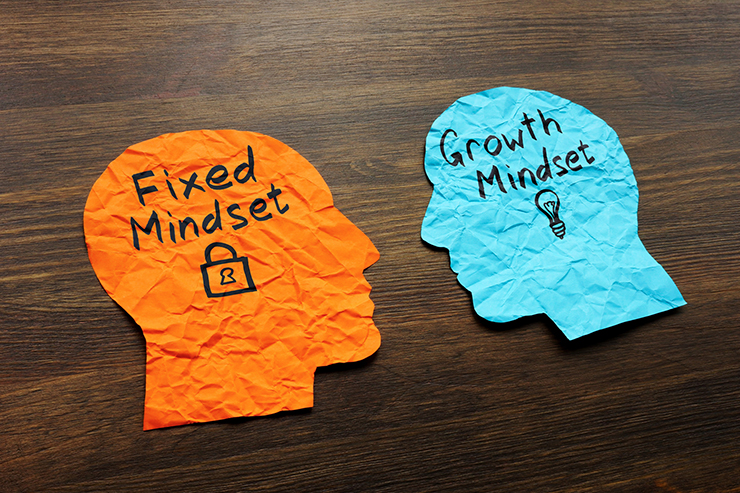
To get to the heart of his struggles, let’s examine James’ mindset. Drawing on Carol Dweck’s research on fixed and growth mindsets, we can see why he would hit a wall.

A fixed mindset assumes abilities and intelligence are static, while a growth mindset believes they can be developed through effort and learning.

James certainly exhibited a fixed mindset.

He saw the current challenges as beyond his control and doubted his leadership abilities were enough to overcome them. This mindset limited his capacity to adapt, innovate, and inspire his team.

This hindered his effectiveness and created a culture of fear and resistance to change. Team members became reluctant to take risks or propose new ideas, leading to stagnation and missed opportunities.

James needed to pivot quickly, or he risked losing his team and his company.

The Strategy

To jumpstart turning things around, we convened off-site for two days to set a vision for his leadership, craft an actionable strategic plan with immediate actions, and do some deeper interventional work to diffuse the origins of his fixed mindset.

We then worked over the next few months to continue cultivating his growth mindset and his abilities to deal with the internal and external challenges that his company faced.

The Shift

James’ team noticed the difference right away, and in the coming weeks and months, their morale and trust rose along with James’ ability to lead and the positive outcomes this produced. It was a pleasure for me to sit in on some of the meetings to observe and support James as he made incremental shifts that made a monumental difference.

How much of a growth mindset do you have? Check yourself here – how do you rate?

  1. I am confident and at ease in embracing challenges.
    • I view challenges as opportunities for personal and professional development.
    • I encourage risk-taking and innovation within the team.
  2. I appreciate learning from constructive feedback.
    • I use constructive feedback as a tool for growth rather than a personal attack.
    • I create an open environment where feedback is welcomed and valued.
  3. I persist in the face of setbacks.
    • I develop resilience by learning from failures and persevering through difficulties.
    • I share stories of past challenges and how they were overcome to inspire the team.

Here are some tips to foster a leader’s growth mindset:

  1. Practice Mindfulness
    • Engage in mindfulness practices such as meditation to increase self-awareness and emotional regulation.
    • Mindfulness helps leaders stay present, reducing stress and improving decision-making. Sarah can start her day with a brief mindfulness session to center herself and approach challenges with a calm and focused mind.
  2. Continuous Learning
    • Commit to lifelong learning by regularly reading books, attending workshops, and seeking new experiences.
    • Encourage the team to pursue personal development opportunities. Sarah can create a learning culture within her organization by providing resources and incentives for continuous education and professional growth.
  3. Surround Yourself with Growth-Minded People
    • Build a network of mentors, peers, and advisors who embody a growth mindset.
    • Engage in regular discussions with these individuals to gain new perspectives and insights. Sarah can join industry groups and networking events to connect with other growth-minded leaders and learn from their experiences.

Mindset matters—a lot.

The mindset of a leader significantly influences their effectiveness and the success of their organization. By shifting from a fixed mindset to a growth mindset, other leaders like James can transform challenges into opportunities for growth and innovation. Embracing challenges, learning from constructive feedback, and persisting in the face of setbacks are key steps in fostering a growth mindset.

Cultivating a growth mindset is an ongoing journey that can transform leadership effectiveness and overall organizational success. By practicing mindfulness, committing to lifelong learning, and surrounding themselves with growth-minded individuals, leaders can create a culture of growth and fulfillment within their organizations.

If you’re a leader feeling stuck, take a step back and ask yourself: Is it time for a mindset shift? You might be surprised at the doors it opens.


© Patti Cotton and patticotton.com. All rights reserved. Unauthorized use and/or duplication of this material without express written permission from the author is strictly prohibited. Excerpts and links may be used, provided that attribution is made to Patti Cotton and patticotton.com, with links thereto.

Patti Cotton

Patti Cotton reenergizes talented leaders and their teams to achieve fulfillment and extraordinary results. For more information on how Patti Cotton can help you and your organization, click here.

To Upgrade Your Leadership, Uplevel Your Leadership Behaviors

June 15, 2022 By Patti Cotton 1 Comment

To Upgrade Your Leadership, Uplevel Your Leadership Behaviors
Image Credit: Shutterstock

How do you as CEO stay on top of your leadership game? Many think reading the latest books on this will keep things fresh. Others rely on bootcamps or CEO peer groups to stimulate their thinking about leading, and to work through business challenges.

Books can provide great insights. Bootcamps can certainly inform you of leadership trends and approaches you might want to consider. And peer groups can bring fresh ideas, community, and accountability.

But statistics show that none of these by themselves (or all together) yield the relevant changes that are most important. In other words, if you are spending significant amounts of money on your leadership in the ways we’ve just mentioned, you may be gaining some good value – but you are still leaving a lot of your leadership potential on the table.

How do you actually sharpen your leadership in the areas that matter most?

To strengthen your leadership, you need to know which areas of your leadership are ready for upleveling, and how to actually make these shifts in order to make lasting change.

Which of your leadership behaviors is ready for an upgrade?

You won’t really know what you need to change until you get good feedback.

As CEO, you may have a fair idea of those areas you need to sharpen. But as a human being, you also have your blind spots. And you can’t see your blind spots, because, well, they are blind spots.

Michael, our CEO in the last three articles, was given some feedback. As you will recall (see last week’s article “Confronting”), Michael was highly motivated to rise above the weeds once and for all, and to bring his team along with him. They had done some important work in establishing a company business imperative with top priorities over the next 12 months, and also identified what this meant for each executive team member’s focus and energy.

When it came time to identify what the team needed in order to accomplish these things, you may remember that the team members shared what they needed as to systems and processes, but also in behaviors – team behaviors together, and leader behaviors from Michael.

“I had no idea some of my behaviors were getting in the way of team effectiveness,” he confessed.

“The good news is, Michael, that you are well respected by your team. You received some good feedback, and we need to use it. Let’s talk about what you heard.”

“Well, I heard that I disempower people by allowing their employees to come directly to me – and I may counter what their supervisor has instructed them. And I also heard that I tend not to listen to the perspectives of the other executive team members when making decisions. Those are pretty big.”

“And I agree with you,” I responded. “Those are the two main behavioral shifts I heard, as well. Do you agree?”

“I agree. I’ll stop doing those things. Today.”

“Not so fast,” I countered. “That’s not the way it works. At least, if you want the change to be effective and to last.”

“Okay, I’m listening,” he said.

You need to identify upgrade behaviors for those you want to replace.

“Explain, please,” said Michael.

“You may know what you need to stop doing, but your brain needs a picture of what it needs to do, instead. For example, if you need to stop allowing employees to come in and work around their supervisors to get a better answer from you, what should you do instead?”

“Ah,” said Michael. “Okay. I need to redirect the employees back to their supervisors.”

“Now you have it!” I responded. “And what about being open to and listening to the perspectives of others?” I asked.

“Well, that one is harder,” Michael mused. “I thought I was open, but evidently I don’t appear to be so.”

“May I give you some feedback?” I asked. “I noticed in our team meeting that, when others gave a different opinion than yours, you acknowledged them, but then went right back to your own perspective. In other words, you didn’t ask them to tell you more, allowing them to share a different point of view, while listening carefully instead of waiting to jump back in.”

“Phew,” said Michael. “This may be tough.”

“True,” I said. “In fact, these kinds of behaviors take up to a year to shift so that they are lasting.”

“Well, how do I stay on track with that?” He asked. “I don’t have a lot of time to spend on this – but it’s key and I know it.”

“Fortunately, the third step is what keeps you on track,” I answered.

Track your progress regularly by getting feedback.

“Your team has given you great feedback. They can also provide you with info on your progress.”

“Like I said, I don’t have a lot of time,” he said.

“Oh, this is a one- to two-minute check-in about once monthly to see how you are doing. And of course, your regular coaching meeting with me to discuss how it’s going, what we need to do to break through roadblocks, keep moving forward, etc.”

“I see,” said Michael. “So, I’ll just be working as usual – only I’ll be integrating upgraded behaviors. That should not take more time – it’s just doing things differently.”

“You are getting it!” I said. “I’m happy to sit with you and put together a plan.”

Michael beamed. “I’m ready,” he said. “I think we are getting the formula for staying on top of the things we want most. If I can rise to the occasion with my leadership, I can bring the others along.”

What in your leadership needs upgrading? How do you know? Reaching the most important goals successfully starts here.


© Patti Cotton and patticotton.com. All rights reserved. Unauthorized use and/or duplication of this material without express written permission from the author is strictly prohibited. Excerpts and links may be used, provided that attribution is made to Patti Cotton and patticotton.com, with links thereto.

Patti Cotton

Patti Cotton reenergizes talented leaders and their teams to achieve fulfillment and extraordinary results. For more information on how Patti Cotton can help you and your organization, click here.

Is Your Company Culture Too Nice?

July 21, 2021 By Patti Cotton Leave a Comment

Is Your Company Culture Too Nice?
Image Credit: Shutterstock

Is your company culture “too nice”?

As a leader, you may think you are doing your business a favor by encouraging politeness. But sometimes, emphasizing this too much may send the wrong message entirely.

How can you tell if you need to toughen up your culture?

Larry was quick to share with me that the culture at his company was warm and friendly, with a “family feel” to it.

“People are very courteous around here,” he said. “But we are in trouble. That’s why I’m calling you for help.”

“What kind of trouble are you experiencing?” I asked.

“I’m discovering that what our people say in meetings is not what they are saying in the hallways. We have quite a few employees that are under-performing, and their supervisors are not willing to hold them accountable. Our deadlines are not being met and we’re not even working on priorities. What’s going on?”

After sitting with Larry and some of his key executives, I discovered what kept his company from being a healthy, high-performing business. And as I shared, Larry’s face showed its dismay.

“You mean the very thing that I emphasized has created the problem?” he asked.

“Not exactly, Larry,” I answered. “Being kind and polite is important. But you need to make sure they don’t take this to mean an unwillingness to set expectations, be transparent, and hold people accountable.”

“I thought I was motivating the staff,” he answered. “After all, you ‘catch more flies with honey than vinegar,’ as they say.”

“Unfortunately, leaders over-emphasize politeness for a variety of reasons, Larry,” I said. “Some may not like conflict. Some might think, as you, that it will motivate people. Others may feel this will foster inclusion. But look where we have wound up, here.

“In fact, I’m willing to wager that you have people agreeing with each other on decisions when you should have healthy debate with different perspectives. This means you are killing possibilities of innovating. You probably have some people who were hired at a high-performing level who have now slowed down their pace to ‘meet the herd.’ And you probably have hidden conflict because people aren’t willing to address critical issues that keep the company from moving forward.”

“You are right,” Larry answered. “I can see that, now. So, what do I do?”

Here are some key steps I outlined which reflect the work we did together over the next few months to turn around Larry’s poor culture.

1. Set new expectations.

When it’s time to shift gears to foster a healthier culture, know what you want – and set these expectations very explicitly. This means defining what your cultural norms are and how they appear in action.For example, if one of your cultural norms is “respect,” what does respect look like when people work with each other? Instead of avoiding tough issues, it can mean confronting these issues by providing timely, critical feedback that supports growth.

2. Foster psychological safety at every level.

There is no high-performing team without psychological safety. Your team members must have each other’s back, support differing perspectives, ensure that everyone has a voice, and more. These are part of team norms – and if you haven’t done this work yet, it’s time now. You will see a huge difference in the way that your team is motivated, how they produce, and how they work together.

3. Hold people accountable for the right things.

Most businesses hold their people accountable for deadlines and for goals reached. But they seldom build in the system and processes they need to support human behavior. What this means is that if you want your people to be respectfully candid and talk about real issues, you need to encourage and reward this.

How does your company’s culture measure up?

  • Are you happy with how motivated and engaged your staff are?
  • How well do they brainstorm to innovate?
  • Do you reward supportive critical feedback that fosters greater development?

Focusing on your company culture means exponentially increasing your business revenues. If you find, like Larry, that your company isn’t where you want it to be, commit to making this a priority.


© Patti Cotton and patticotton.com. All rights reserved. Unauthorized use and/or duplication of this material without express written permission from the author is strictly prohibited. Excerpts and links may be used, provided that attribution is made to Patti Cotton and patticotton.com, with links thereto.

Patti Cotton

Patti Cotton reenergizes talented leaders and their teams to achieve fulfillment and extraordinary results. For more information on how Patti Cotton can help you and your organization, click here.

  • Page 1
  • Page 2
  • Page 3
  • Go to Next Page »

Primary Sidebar

Patti Cotton
Tweets by @PattiCotton
  • About
  • Consulting
  • Training
  • Speaking
  • Blog
  • Contact
Home | Contact | Privacy Policy

© 2024 Cotton Group LLC | PATTI COTTON 360° LEADERSHIP®