• Skip to main content
  • Skip to primary sidebar

Patti Cotton

Executive Coach & Career Strategist

  • About
  • Consulting
  • Training
  • Speaking
  • Blog
  • Contact

Influence

The Role of Mindset in Leadership Success

July 31, 2024 By Patti Cotton Leave a Comment

The Role of Mindset in Leadership Success
Image Credit: Depositphotos

When it comes to leadership, the importance of mindset cannot be overstated. How leaders perceive challenges, handle feedback, and inspire their teams is deeply rooted in their mindset. A growth-oriented mindset can transform obstacles into opportunities, fostering an environment where both the leader and their team can thrive.

The Struggle

James was the CEO of a mid-sized tech company that had seen rapid growth over the past few years. When he reached out, he had been struggling to maintain this momentum and keep his team motivated. The market was more volatile than ever, and the competition was fierce.

“I’m overwhelmed,” he told me. “I’m not sure about my ability to steer the company through such choppy waters.”

He was convinced that his main issue was external—market volatility and increasing competition. Seeing these challenges as insurmountable obstacles, he felt stuck and unable to come up with effective solutions. His team sensed James’ stress and self-doubt.

The Source

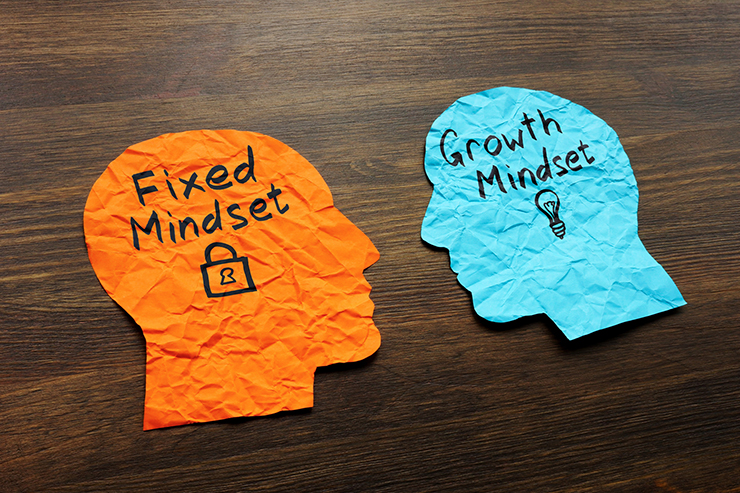
To get to the heart of his struggles, let’s examine James’ mindset. Drawing on Carol Dweck’s research on fixed and growth mindsets, we can see why he would hit a wall.

A fixed mindset assumes abilities and intelligence are static, while a growth mindset believes they can be developed through effort and learning.

James certainly exhibited a fixed mindset.

He saw the current challenges as beyond his control and doubted his leadership abilities were enough to overcome them. This mindset limited his capacity to adapt, innovate, and inspire his team.

This hindered his effectiveness and created a culture of fear and resistance to change. Team members became reluctant to take risks or propose new ideas, leading to stagnation and missed opportunities.

James needed to pivot quickly, or he risked losing his team and his company.

The Strategy

To jumpstart turning things around, we convened off-site for two days to set a vision for his leadership, craft an actionable strategic plan with immediate actions, and do some deeper interventional work to diffuse the origins of his fixed mindset.

We then worked over the next few months to continue cultivating his growth mindset and his abilities to deal with the internal and external challenges that his company faced.

The Shift

James’ team noticed the difference right away, and in the coming weeks and months, their morale and trust rose along with James’ ability to lead and the positive outcomes this produced. It was a pleasure for me to sit in on some of the meetings to observe and support James as he made incremental shifts that made a monumental difference.

How much of a growth mindset do you have? Check yourself here – how do you rate?

  1. I am confident and at ease in embracing challenges.
    • I view challenges as opportunities for personal and professional development.
    • I encourage risk-taking and innovation within the team.
  2. I appreciate learning from constructive feedback.
    • I use constructive feedback as a tool for growth rather than a personal attack.
    • I create an open environment where feedback is welcomed and valued.
  3. I persist in the face of setbacks.
    • I develop resilience by learning from failures and persevering through difficulties.
    • I share stories of past challenges and how they were overcome to inspire the team.

Here are some tips to foster a leader’s growth mindset:

  1. Practice Mindfulness
    • Engage in mindfulness practices such as meditation to increase self-awareness and emotional regulation.
    • Mindfulness helps leaders stay present, reducing stress and improving decision-making. Sarah can start her day with a brief mindfulness session to center herself and approach challenges with a calm and focused mind.
  2. Continuous Learning
    • Commit to lifelong learning by regularly reading books, attending workshops, and seeking new experiences.
    • Encourage the team to pursue personal development opportunities. Sarah can create a learning culture within her organization by providing resources and incentives for continuous education and professional growth.
  3. Surround Yourself with Growth-Minded People
    • Build a network of mentors, peers, and advisors who embody a growth mindset.
    • Engage in regular discussions with these individuals to gain new perspectives and insights. Sarah can join industry groups and networking events to connect with other growth-minded leaders and learn from their experiences.

Mindset matters—a lot.

The mindset of a leader significantly influences their effectiveness and the success of their organization. By shifting from a fixed mindset to a growth mindset, other leaders like James can transform challenges into opportunities for growth and innovation. Embracing challenges, learning from constructive feedback, and persisting in the face of setbacks are key steps in fostering a growth mindset.

Cultivating a growth mindset is an ongoing journey that can transform leadership effectiveness and overall organizational success. By practicing mindfulness, committing to lifelong learning, and surrounding themselves with growth-minded individuals, leaders can create a culture of growth and fulfillment within their organizations.

If you’re a leader feeling stuck, take a step back and ask yourself: Is it time for a mindset shift? You might be surprised at the doors it opens.


© Patti Cotton and patticotton.com. All rights reserved. Unauthorized use and/or duplication of this material without express written permission from the author is strictly prohibited. Excerpts and links may be used, provided that attribution is made to Patti Cotton and patticotton.com, with links thereto.

Patti Cotton

Patti Cotton reenergizes talented leaders and their teams to achieve fulfillment and extraordinary results. For more information on how Patti Cotton can help you and your organization, click here.

Combating Decision Fatigue: Empowering Executives to Make Better Choices

June 18, 2024 By Patti Cotton 1 Comment

Combating Decision Fatigue: Empowering Executives to Make Better Choices
Image Credit: Depositphotos

Imagine Jane (a real situation, but fictitious name), a senior executive at a fast-growing tech company. Jane is brilliant, driven, and deeply committed to her role; and her leadership has helped the company outperform its two main competitors.

When I met her, however, Jane was feeling overwhelmed.

“Every day presents a relentless stream of decisions, both big and small. Honestly, it feels harder and harder to keep up. I’m mentally exhausted.”

What Jane was experiencing is decision fatigue, a common challenge for leaders like her, who oversee a volatile and dynamic environment.

Decision fatigue occurs when the quality of our decisions declines after an extended period of decision-making. For someone in Jane’s position, the constant need to make high-stakes decisions, coupled with managing complex issues, exacerbates this phenomenon.

Factors contributing to decision fatigue most often include the following:

  • Volume of Decisions – Jane faced an endless array of decisions daily, from strategic directions to operational details.
  • High-Stakes Nature – Each decision carries significant consequences, adding immense pressure.
  • Lack of Rest – Jane rarely took breaks, leading to mental exhaustion and diminished cognitive function.

Effect on the Team

As I talked with members of Jane’s team, it was clear that they were eager to support her and at the same time, concerned with how her leadership was taking a turn.

“She always seems tired, and when I present her with an issue, she seems to struggle to think clearly,” said one.

“True,’ said another. “She was quick to make choices that are straightforward, but they seem overwhelming, now.”

All agreed that Jane now became easily frustrated over minor issues. “I’m not even sure when to bring things to her attention,” said a third. “I’m starting to lose confidence in our ability to pull things off.”

It was clear that decision fatigue didn’t just affect Jane—it rippled through her leadership and organization, as it always does.

  • Jane experienced decreased productivity and heightened stress, edging towards burnout.
  • Jane’s impaired judgment and indecisiveness undermined her leadership effectiveness.
  • Her team’s morale and performance suffered, as they lost confidence in her decision-making.
  • This decline was starting to impact the company’s overall performance.

Internal Shifts and External Changes

To address decision fatigue, Jane had to make both internal shifts and external changes.

First, Jane had to recognize the real problem.

She initially perceived that she was simply overwhelmed by the volume of decisions. However, the real issue lay in her lack of effective decision-making strategies and self-care practices. Without these, the cognitive load became unmanageable.

Jane’s inner shifts included prioritizing self-care and mental health with regular exercise, enough sleep, and mindfulness and stress management techniques. This helped to recalibrate her nervous system and scattered thinking, and to replace this with a solid sense of calm and the ability to focus well.

She also needed to create a decision-making framework to simplify her process by categorizing decisions and delegating lower-stake choices.

These were simple shifts, but they required initiating new habits. As we worked on these, we also worked on some key external changes, including reviewing where Jane needed to delegate decision-making and how she might develop the trust to do so.

We also worked with her team to implement structured decision-making processes to ensure consistency.

And finally, Jane acknowledged that regular breaks and time off would be vital to helping her recharge. She recognized that this would be important for her team, as well, and they came to a mutual decision to implement this team wide.

What did this ultimately do for Jane and her company?

As I shared in the beginning, today, Jane’s company is out in front of her two main competitors with the lion’s share of the market. After establishing norms for decision-making, along with mental health and self-care, she was able to focus on developing a supportive work environment and to lead in the way that only someone in her role could.

What does this mean for you?

Jane’s story illustrates how decision fatigue can affect even the most capable leaders. By understanding its causes and impacts, and taking proactive steps to mitigate its effects, executives can enhance their decision-making capabilities.

Implementing both internal shifts, such as self-care and mindfulness, and external changes, like effective delegation and structured processes, can empower them to lead more effectively. This not only improves their well-being but also ensures their teams and organizations thrive.


© Patti Cotton and patticotton.com. All rights reserved. Unauthorized use and/or duplication of this material without express written permission from the author is strictly prohibited. Excerpts and links may be used, provided that attribution is made to Patti Cotton and patticotton.com, with links thereto.

Patti Cotton

Patti Cotton reenergizes talented leaders and their teams to achieve fulfillment and extraordinary results. For more information on how Patti Cotton can help you and your organization, click here.

How Do You Sustain Necessary Change?

June 29, 2022 By Patti Cotton Leave a Comment

How Do You Sustain Necessary Change?
Image Credit: Shutterstock

You’ve made the changes. You have your business imperative in hand to keep you focused. You’ve aligned and coordinated your executive team around this business imperative. You’ve had some tough conversations to clear the air (and the plates), and you’ve identified the leadership behaviors necessary to support your team in making this happen.

But your team is scared. Or worse, they are at a point where they don’t trust this will work.

Michael, a well-respected CEO, had just led his executive team through these same steps. He was sick and tired of being in the weeds, feeling as though the company wasn’t meeting its business potential.

But his team was scared.

Sandra, his VP of marketing, spoke up. “We’ve gone through the exercise one too many times, and the changes sound great. We start out strong, then fizzle out. The changes we try to make don’t stick. I can’t even muster up the courage to try, this time.”

“Frankly, I’m skeptical, too” said Max, the COO. “We’ve tried and died quite a bit.”

“Patti,” Michael turned to me, “I may as well pack it up. If the team won’t commit, we aren’t going to make any progress.”

“Team,” I said, “Hold tight. There’s a last critical step in the process that ensures that you stay on the path. Most companies miss this step – and it makes all the difference.”

“I’m all ears,” said Candace, the CFO. “Because if this doesn’t work, I’m not sure I can retrieve any muster to move forward. At all.”

The room was quiet for a moment.

“I understand,” I said. “Change is hard. And unless we approach it in a way that supports its success, the discouragement is overwhelming. But hang on, please. Your track record is about to change.”

What did we do?

We created a system of accountability to hold the changes firmly in place. Because a change, no matter how big or small, requires a supportive system to allow it to become the norm.

And here’s how we did it for Michael’s team.

“Team,” I said, “You have taken the first 4 of 5 steps to make this work. Michael has created the company’s business imperative to set the direction (see Article 1 in this series). He has worked with you all to create and align your own business imperatives to support the larger one (see Article 2 in this series). You’ve surfaced some critical conversations that needed to be addressed in order to move forward (see Article 3 in this series). And you have identified how you need to work as a team in order to reach these goals (see Article 4 in this series). Now, it’s time for step 5: putting a system in place to keep you all on the path as you move into greater excellence.”

“I’m all ears, Patti,” said Candace. The others nodded.

“We are going to ask ourselves five questions as we review your goals and the changes you have identified that you need to make,” I said. “This will help us to create a system to hold the process – and ourselves – accountable. It will help us stay on track.”

Question 1: What are we measuring?

We worked to identify what we needed to measure in order to know that we were on the right path and moving at the right pace. What would we look for that measured success? We broke it down by quarter, and then by month, so we could course-correct in a timely manner if something was not working.

Question 2: Who needs to know?

We then identified key stakeholders for each initiative. Even though the team knew who was in charge of what, they did not always communicate to others who might be affected by the work. The team also identified how and when the stakeholders would communicate with each other and built this into their regular meeting agendas. Michael would review each team member’s progress for their area during their 1:1 meetings.

Question 3: How do we check on progress?

Michael took charge of this and built into the executive team’s monthly agenda discussion time to review the team’s alignment and coordination as they worked on goals. What was working? What needed refining or redirecting? The team looked at other feedback loop opportunities to make sure they could tap into needed information at any time.

Question 4: How do we support upgraded leadership behaviors?

The team recognized that working together at a higher level required higher skill-building. They asked me to work with them individually to break through any roadblocks holding them back, and to help them step into more effective leadership behaviors.

Question 5: What are the conversations we need to have now?

We agreed that I would also meet once quarterly with the team to work with them on any trust issues, as well as critical conversations and needed relational skill-building. Without this fifth step, a team does well at best, but never reaches its peak performance.

I’m happy to report that Michael and his team made incredible progress company- and team-wise in that first 12 months. And so, we decided to repeat this for Year 2, knowing that things would only continue to reach new and exciting heights. It is Year 3 for them, and they have established themselves as a leader in their industry.

Where in the process I have described above do you and your team excel? Where do you need to put a system in place, or to strengthen this so that it works well for you?


© Patti Cotton and patticotton.com. All rights reserved. Unauthorized use and/or duplication of this material without express written permission from the author is strictly prohibited. Excerpts and links may be used, provided that attribution is made to Patti Cotton and patticotton.com, with links thereto.

Patti Cotton

Patti Cotton reenergizes talented leaders and their teams to achieve fulfillment and extraordinary results. For more information on how Patti Cotton can help you and your organization, click here.

To Upgrade Your Leadership, Uplevel Your Leadership Behaviors

June 15, 2022 By Patti Cotton 1 Comment

To Upgrade Your Leadership, Uplevel Your Leadership Behaviors
Image Credit: Shutterstock

How do you as CEO stay on top of your leadership game? Many think reading the latest books on this will keep things fresh. Others rely on bootcamps or CEO peer groups to stimulate their thinking about leading, and to work through business challenges.

Books can provide great insights. Bootcamps can certainly inform you of leadership trends and approaches you might want to consider. And peer groups can bring fresh ideas, community, and accountability.

But statistics show that none of these by themselves (or all together) yield the relevant changes that are most important. In other words, if you are spending significant amounts of money on your leadership in the ways we’ve just mentioned, you may be gaining some good value – but you are still leaving a lot of your leadership potential on the table.

How do you actually sharpen your leadership in the areas that matter most?

To strengthen your leadership, you need to know which areas of your leadership are ready for upleveling, and how to actually make these shifts in order to make lasting change.

Which of your leadership behaviors is ready for an upgrade?

You won’t really know what you need to change until you get good feedback.

As CEO, you may have a fair idea of those areas you need to sharpen. But as a human being, you also have your blind spots. And you can’t see your blind spots, because, well, they are blind spots.

Michael, our CEO in the last three articles, was given some feedback. As you will recall (see last week’s article “Confronting”), Michael was highly motivated to rise above the weeds once and for all, and to bring his team along with him. They had done some important work in establishing a company business imperative with top priorities over the next 12 months, and also identified what this meant for each executive team member’s focus and energy.

When it came time to identify what the team needed in order to accomplish these things, you may remember that the team members shared what they needed as to systems and processes, but also in behaviors – team behaviors together, and leader behaviors from Michael.

“I had no idea some of my behaviors were getting in the way of team effectiveness,” he confessed.

“The good news is, Michael, that you are well respected by your team. You received some good feedback, and we need to use it. Let’s talk about what you heard.”

“Well, I heard that I disempower people by allowing their employees to come directly to me – and I may counter what their supervisor has instructed them. And I also heard that I tend not to listen to the perspectives of the other executive team members when making decisions. Those are pretty big.”

“And I agree with you,” I responded. “Those are the two main behavioral shifts I heard, as well. Do you agree?”

“I agree. I’ll stop doing those things. Today.”

“Not so fast,” I countered. “That’s not the way it works. At least, if you want the change to be effective and to last.”

“Okay, I’m listening,” he said.

You need to identify upgrade behaviors for those you want to replace.

“Explain, please,” said Michael.

“You may know what you need to stop doing, but your brain needs a picture of what it needs to do, instead. For example, if you need to stop allowing employees to come in and work around their supervisors to get a better answer from you, what should you do instead?”

“Ah,” said Michael. “Okay. I need to redirect the employees back to their supervisors.”

“Now you have it!” I responded. “And what about being open to and listening to the perspectives of others?” I asked.

“Well, that one is harder,” Michael mused. “I thought I was open, but evidently I don’t appear to be so.”

“May I give you some feedback?” I asked. “I noticed in our team meeting that, when others gave a different opinion than yours, you acknowledged them, but then went right back to your own perspective. In other words, you didn’t ask them to tell you more, allowing them to share a different point of view, while listening carefully instead of waiting to jump back in.”

“Phew,” said Michael. “This may be tough.”

“True,” I said. “In fact, these kinds of behaviors take up to a year to shift so that they are lasting.”

“Well, how do I stay on track with that?” He asked. “I don’t have a lot of time to spend on this – but it’s key and I know it.”

“Fortunately, the third step is what keeps you on track,” I answered.

Track your progress regularly by getting feedback.

“Your team has given you great feedback. They can also provide you with info on your progress.”

“Like I said, I don’t have a lot of time,” he said.

“Oh, this is a one- to two-minute check-in about once monthly to see how you are doing. And of course, your regular coaching meeting with me to discuss how it’s going, what we need to do to break through roadblocks, keep moving forward, etc.”

“I see,” said Michael. “So, I’ll just be working as usual – only I’ll be integrating upgraded behaviors. That should not take more time – it’s just doing things differently.”

“You are getting it!” I said. “I’m happy to sit with you and put together a plan.”

Michael beamed. “I’m ready,” he said. “I think we are getting the formula for staying on top of the things we want most. If I can rise to the occasion with my leadership, I can bring the others along.”

What in your leadership needs upgrading? How do you know? Reaching the most important goals successfully starts here.


© Patti Cotton and patticotton.com. All rights reserved. Unauthorized use and/or duplication of this material without express written permission from the author is strictly prohibited. Excerpts and links may be used, provided that attribution is made to Patti Cotton and patticotton.com, with links thereto.

Patti Cotton

Patti Cotton reenergizes talented leaders and their teams to achieve fulfillment and extraordinary results. For more information on how Patti Cotton can help you and your organization, click here.

Confronting Elephants in the Room That Hold Your Executive Team Back

June 8, 2022 By Patti Cotton Leave a Comment

Confronting Elephants in the Room That Hold Your Executive Team Back
Image Credit: Shutterstock

Aligning and coordinating your team in a strategic direction is paramount. However, as challenging as this might seem, it is easy compared to the conversations you and your team need to have around what will actually make the plan work.

Surprised?

So was our CEO, Michael.

He thought that setting a clear direction (see the article Getting Your Leadership and Company Out of the Weeds) and aligning and coordinating his executive team’s energies around this (see the article How to Align and Coordinate Your Team) would get them to “hit the ground running.”

Not so. In fact, his efforts had only been the first two of five important steps to becoming a high-performing team to meet the goals that matter most.

Aligning and coordinating his team revealed some deep, dark secrets that turned out to be what actually held his team back.

As a reminder, Michael had set a business imperative for the year as a first step to getting out of the weeds. He then took this to his executive team and asked each of them to consider their respective areas of responsibility as they drew up their own business imperatives to support the larger one. Recognizing that this would require some time, they agreed to meet the following week.

As they reconvene seven days later, let’s sit in on their conversation…

“Max,” I asked the COO. “You had a great question just before we adjourned our last meeting. You asked if redirecting the team’s energy around the business imperative would not require that we reexamine the other initiatives currently on your plates.”

“That’s right,” Max responded.

Candace, the CFO interjected. “Patti, I’m more interested in the shifts in behaviors you mentioned we would have to discuss.”

“Great kick-off to this meeting,” I responded. “If you will recall, I mentioned that you are all part of a system, and that all parts of the system need to work together in an aligned and coordinated way. This means not only having the same focus and organizing your efforts, but also confronting those things that hold you back from getting this done.”

“We are going to talk about what will hold you back from achieving the goals you have set together. I call these the “elephants in the room.” These are things that interfere with moving forward. And we are all well aware of them. But we don’t address them for various reasons.”

Max spoke up. “Like the fact that we probably won’t effectively address what to do with the other initiatives we have on our plates, because we just hope that by ignoring them, they will get done, anyway.”

“Right!” I said.

Michael spoke up. “And how about things take away from our focus?” He glanced at Candace. “For instance, employee problems that keep happening because we don’t want to confront them.”

“Well, if you are going to talk about this, then let’s talk about it,” bristled Candace. “Because if we are really going to surface these elephants in the room, then let’s talk about that employee situation to which you are probably referring, which occurred again last week.”

“That’s exactly what I’m talking about,” said Michael.

“Well,” Candace took a deep breath, “Would it surprise you to know that I feel you are the cause of that problem?”

The entire room fell silent.

“Okay,” said Michael. “I’m listening.”

Candace resumed. “I actually spent another two hours in HR last week over those two employees, only to find out that I couldn’t take action. Apparently, one of them had gone straight to you and gotten permission to do exactly what I had told him not to do. This happens a lot! So how do we handle that, Michael?”

“Now, we are talking,” I said. “We’ve just begun to reveal and confront some of the important things that are holding you all back.”

Michael sat back in his chair. “It sounds like I may be a chief culprit in keeping us in the weeds.”

“Well, I guess I can stand with you,” said Candace. “I’ve been avoiding this conversation for months.”

“Take heart, team,” I said. “This happens to the best of companies. The good news is, we can turn this around. The heart of successful change lies in identifying these behaviors and actions that hold us back – and in having the courage to confront them together.”

We spent the next two hours identifying main areas where shifts needed to occur. The team was subdued as they adjourned.

“Just a minute, team,” Michael paused. “I want to say a couple of things. First, I want to apologize for what I now know has held us back. I’m going to work very hard on making these changes. I’m thankful that you listened to the shifts I need to see in the team – and I’m very proud of you for speaking up today; for having the courage to confront me on what I need to do to support these changes.”

“I want to second the motion,” I shared. “And believe it or not, when we confront what is holding us back, this is when great things begin to happen. Let’s meet next week to pull this forward. It’s not enough to reveal the elephants – we need to up-level these behaviors to move past them.”

What are the elephants you need to confront in your executive team room? Next week, we will talk about how to up-level the behaviors and actions that hold you back so that you, too, can move forward.


© Patti Cotton and patticotton.com. All rights reserved. Unauthorized use and/or duplication of this material without express written permission from the author is strictly prohibited. Excerpts and links may be used, provided that attribution is made to Patti Cotton and patticotton.com, with links thereto.

Patti Cotton

Patti Cotton reenergizes talented leaders and their teams to achieve fulfillment and extraordinary results. For more information on how Patti Cotton can help you and your organization, click here.

  • « Go to Previous Page
  • Page 1
  • Page 2
  • Page 3
  • Page 4
  • Interim pages omitted …
  • Page 17
  • Go to Next Page »

Primary Sidebar

Patti Cotton
Tweets by @PattiCotton
  • About
  • Consulting
  • Training
  • Speaking
  • Blog
  • Contact
Home | Contact | Privacy Policy

© 2024 Cotton Group LLC | PATTI COTTON 360° LEADERSHIP®