• Skip to main content
  • Skip to primary sidebar

Patti Cotton

Executive Coach & Career Strategist

  • About
  • Consulting
  • Training
  • Speaking
  • Blog
  • Contact

team member

Are You Playing Favorites on the Executive Team?

May 27, 2020 By Patti Cotton Leave a Comment

Are You Playing Favorites on the Executive Team?
Image Credit: Shutterstock

It’s natural for us to favor some personalities more than others. When we feel a comfortable energy and alignment, it makes conversations and common experiences flow. No doubt, you have one team member with whom you hit it off more easily than others.

Then, there’s “that other one” on the team with whom things seem a bit more stilted. You feel a small undercurrent of resistance or tension when they bring forth ideas. You don’t enjoy conversations with them, and you find yourself dismissing their contributions.

These relational dynamics can give the impression that you are playing favorites (and maybe you are!). And this damages your team’s ability to work best together. Because if you are noticing your bias, so are they.

What do you do?

1. Get perspective.

Talk to a mentor or colleague outside of the team and check your intolerance. Allowing someone you trust to give you some outside perspective might help you to flush out hidden biases that need reconciling on your part.

2. Shift your focus.

Find things you appreciate about the person. Begin to look for ways you appreciate this team member on a personal and professional basis. Notice unique qualities she contributes. Ferret out ways he lends positively to the team or outcomes. This will help you rebalance your view of the team member.

3. Build bridges.

Begin to call on your “unfavored” team member first when asking for opinions in meetings. Chances are, if they have not been speaking up, you haven’t been encouraging it. Think about instituting individual coffees or breakfasts with your team members, and be sure to start with this particular team member. Seek to identify projects and other discussions which will allow you more face time with them so that you can practice engaging differently with them.

Finally, remember that as leader, you are the role model for the team and, in turn, the rest of the organization. Making the conscious decision to turn a problem into an opportunity can only be a great learning lesson, and a win for all of you.


© Patti Cotton and patticotton.com. All rights reserved. Unauthorized use and/or duplication of this material without express written permission from the author is strictly prohibited. Excerpts and links may be used, provided that attribution is made to Patti Cotton and patticotton.com, with links thereto.

Patti Cotton

Patti Cotton reenergizes talented leaders and their teams to achieve fulfillment and extraordinary results. For more information on how Patti Cotton can help you and your organization, click here.
Why Your Talented Team Member Won’t Speak Up

May 6, 2020 By Patti Cotton Leave a Comment

Why Your Talented Team Member Won’t Speak Up
Image Credit: Shutterstock

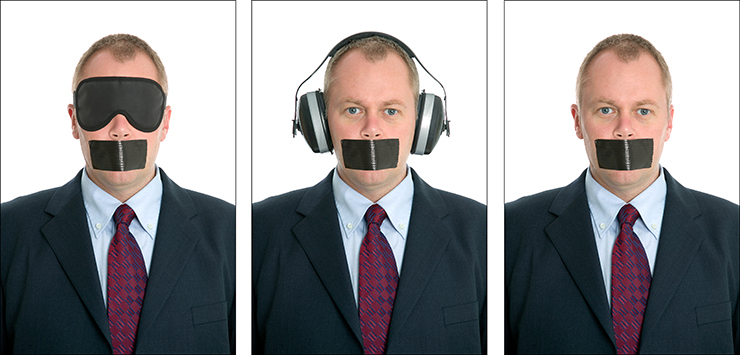
Do you have a team member who has great talent but won’t speak up to contribute? There are several possible reasons why.

And the bottom line is if your team member won’t speak up, you are losing revenue and momentum – simply because he isn’t adding the value he could.

What can you do?

Let’s take a look at five different executive teams in the following scenarios. Each had at least one team member who wasn’t speaking up. Do any of these cases sound familiar to your own team’s situation?

Jim and the So-Called Expert

Jim has been CMO for a year, now. He has an impressive track record and an uncanny sense of what to anticipate in order to serve customers. In his one-on-one meetings, Jim shows great strength in strategizing. But when he gets into the executive team meetings, he simply shuts down. His CEO is frustrated. If Jim keeps quiet, the team isn’t able to benefit from his expertise and perspective.

“Sandra’s the self-proclaimed expert on our team,” Jim explains wryly. “As CFO, she has decided she’s the person with the organizational ‘eye.’ Whether she knows what she’s talking about or not, she will weigh in and do it first. Others may jump in and play – but I’m just not willing to do that. If someone wants my opinion, I guess they will ask me.”

Samantha’s Intolerance for Poor Arguments

The executive team wonders if Samantha is really happy at the company. She starts to speak up but shuts down quickly when the team wants to move toward a solution. Samantha is becoming disengaged and it shows. Her CEO is worried. “I need a CIO who can wrap her arms around problems and run with the solutions,” she says.

Samantha has another view on this. She says, “Quite simply, the executive team is lazy. They always settle for less – the path of least resistance. Every time I suggest doing some outside research to see what others are doing, they snuff me out. I’m tired of contributing to inferior arguments for poor solutions. Why doesn’t our CEO take Samantha aside and give her some coaching on this?”

Bill and His Need for a Business Case

Bill speaks up at times and shuts down at others. His team members wonder which Bill is going to show up today – the one who contributes, or the one who seems to mentally check out at odd points in meeting discussions. Bill’s CEO wonders why Bill dips in and out of discussions.

Bill himself says he gets quiet when he can’t figure out how certain decisions impact the larger picture. “Sometimes the team seems to get into discussing pet projects that don’t really support the business imperative we set for this year,” he says. “I have a hard time hanging in there when it doesn’t make sense to the larger picture. Why doesn’t our CEO stop it and get us back on track? He lets this stuff go on forever and our meetings become pretty ineffective.”

Dani the Divergent Thinker

“Dani’s a bright leader whose best days are yet to come,” said her CEO. “But I can’t figure out why the rest of the team gets frustrated with her when discussing certain topics. I’ve been waiting for her to figure it out. Or for them to all work it out. But it’s not happening.”

Dani has additional light to shed on this. “My team is very structured in its conversations,” she begins. “The members seem to be ‘convergent thinkers,’ and they follow a very tight process to arrive at solutions. Don’t get me wrong – we need to come to some quick decisions in this current environment. But I’m a ‘divergent thinker’ and need to free-flow a bit to come up with best solutions. I’m pretty frustrated that when we are looking to innovate, my contributions seem to be perceived as getting us off course. I simply shut down when that happens. I wish my CEO would check in with me – surely he sees that I’m not participating?”

Jan Wants Better Decision-Making

Jan is perceived as “dead weight” on the executive team. Her credentials and expertise are impressive, but she doesn’t contribute her wealth of knowledge to the team’s benefit. She used to speak up, but took what seemed to be an argumentative tone which deterred others from entering into conversation. She now defers to others on the team without really contributing. Her CEO wonders if she simply doesn’t know how to get along with others.

“I have become tired of being perceived as contrary,” Jan shares. “In my last position with another company, we prized bantering back and forth with different perspectives on things. No one took it as arguing; rather, they enjoyed turning issues on their proverbial heads to examine all sides. The result was a rich outcome. We enjoyed it. Here, it appears I’m just arguing. I wish someone would be real enough to talk with me about it – and to entertain another possibility besides seeing me as antagonistic. Perhaps it’s my tone. I wish my CEO would give me feedback, but she acts like she doesn’t see it.”

And what about the talented, but quiet team member on your own team? What’s his or her side of the story? If you are in charge, it’s time for you to work on how your team can work together to resolve this. The loss is too great to let this go – and the ROI once you bring this to resolution too great to leave on the table.


© Patti Cotton and patticotton.com. All rights reserved. Unauthorized use and/or duplication of this material without express written permission from the author is strictly prohibited. Excerpts and links may be used, provided that attribution is made to Patti Cotton and patticotton.com, with links thereto.

Patti Cotton

Patti Cotton reenergizes talented leaders and their teams to achieve fulfillment and extraordinary results. For more information on how Patti Cotton can help you and your organization, click here.

Do You Have a People Pleaser on the Executive Team?

March 11, 2020 By Patti Cotton Leave a Comment

Do You Have a People Pleaser on the Executive Team?
Image Credit: Shutterstock

Do you have a people pleaser on the executive team? Someone who might change opinions depending on which way the wind blows?

If so, you have a major trust leak in the team.

How can you tell if you have a people pleaser? And what can you do if you identify one?

Your people pleaser means well. In fact, this is his or her main driving force in life. But because they are busy making sure they fit in, people pleasers can’t support a particular idea or direction with integrity.

Sandy was a newly appointed executive in a large software tech company. One of the chief reasons she had interviewed well was that she exhibited a great deal of empathy.

“We needed more empathy on the executive team,” said Anna, the CEO. “In our world, tech can tend to come before people, and we were making an effort to infuse leadership with more human connection and understanding.”

“You are right to keep that in mind,” I answered. “We are losing human connection in the workplace. And empathy as one of the emotional intelligence traits is key in leadership.”

“She also brought a wealth of technical knowledge, so I felt it was a great combo,” Anna continued. “But I’m noticing that she can’t tether to a decision she makes. And she actually looks at other people to see what they are going to say before she offers an opinion.”

“This is serious,” I said. “It sounds like you have someone on the team who is stuck in what we call ‘the socialized mind.’”

“Well, whatever you call it, the team has started to distrust her. They don’t know how to take what she says or presents with any kind of certainty. She pretends to agree with everyone and seems to try to act like the people around her. A real chameleon. And she is constantly asking for feedback – seems to need praise to feel good. It’s exhausting.”

“Those are hallmarks of a socialized mind,” I responded. “This means she relies on the external world to tell her who she is and what value she brings.”

“It’s just not working,” Anna said. “I need someone who can contribute by bringing her own perspective and expertise to the mix. Someone who isn’t afraid to counter an opinion, but who can also negotiate to a great solution. When I tried to talk with her about this the other day, she just kept apologizing and started crying. I need your help.”

I met with Sandy, who was, of course, eager to please. It was clear she needed to show me that she understood and agreed with me, no matter what I shared. Not surprising, as we are all creatures of comfort who need to feel that we are accepted and safe. We took some time to become acquainted so that I could develop trust with her. I asked her what she felt was the challenge from her perspective.

“I just want to do the right thing,” she said. “Hearing what is needed is important to me. And I want to make sure I align with others’ thinking so I get it right.”

This showed me clearly that she was ready for growth. There were several things we did over the course of eight months that helped Sandy move from this people-pleasing state to one that was more tethered to her values and beliefs, even in the face of conflict.

A first phase in coaching Sandy was to help her recognize where she was trying to please others instead of standing true to herself as she negotiated solutions with the team. We began by doing some personal values work to solidify her sense of self and to use as a litmus when forming opinions.

At the same time, we identified her fears around carrying different opinions than her team members and tested out of this mindset trap in small ways so that she could become accustomed to disagreeing with others as it felt comfortable.

As her confidence grew, we explored key issues in her company and identifying multiple perspectives on how to solve these. Becoming comfortable with the complex and various ways to resolve such can be threatening to someone who needs to be right in others’ eyes. Working with real-time challenges with which she was familiar helped her to become more comfortable with weighing various options and seeing that more than one might be right.

Later, developing Sandy’s comfort and lens on seeing things as systems was important. The world is complex, and this can be overwhelming for anyone. A person of socialized mind can feel threatened by such complexity. Learning to first see complexity as a system and to become comfortable with the pieces in order to make decisions is key for today’s leadership.

Sandy’s team members rallied, seeing integrity in how she showed up and contributed. She felt the positive results and worked on developing closer relationships with each to strengthen her credibility.

The end result of our coaching? Sandy became a trusted contributor at the leadership level and the company benefited greatly, as well.

Download the Free Infographic

Fill out the form below and get instant access to the HOW TO RAISE YOUR INFLUENCE IN LESS THAN 5 SECONDS infographic.

Share0
Tweet0
Share0

© Patti Cotton and patticotton.com. All rights reserved. Unauthorized use and/or duplication of this material without express written permission from the author is strictly prohibited. Excerpts and links may be used, provided that attribution is made to Patti Cotton and patticotton.com, with links thereto.

Patti Cotton

Patti Cotton reenergizes talented leaders and their teams to achieve fulfillment and extraordinary results. For more information on how Patti Cotton can help you and your organization, click here.

Five Reasons Your Team May Not Be Candid With You

May 2, 2018 By Patti Cotton Leave a Comment

Five Reasons Your Team May Not Be Candid With You
Image Credit: Shutterstock

How engaged is your team? Do the team members come in every day, energized, committed and excited about the work you are doing together? Are they huddled in groups brainstorming and coming up with new ideas?

Or do you get the feeling they need a vitamin shot? Are they sitting around with a second cup of coffee waiting for you to direct them?

What’s the problem?

If your team engagement is low, or its creative juices have dried up, your team members may have decided they just can’t be candid with you.

Why would they think that?

Here are some chief reasons employees aren’t candid with their leader:

1. You suffer from one-way thinking.

Are you really open to other perspectives, or do all your meetings end with your ideas as the only sound ones? If you aren’t open to encouraging and appreciating the ideas of others, people will quickly detect this and shut down. After all – why contribute when it doesn’t ever go anywhere? You will eventually surround yourself with people who simply agree to your ideas, and lose out on the brain trust you have in the room.

2. You don’t do feedback well.

If you don’t genuinely listen for the “gold” in growth opportunities, you are missing out. Your team members may have tried to give you helpful criticism in the past, but if they were met with defensiveness or denial, they will back off and stop trying to work on a better working relationship with you.

3. You’re a self-perceived super hero.

You don’t allow others to contribute. Your mantra is, “I need to start delegating more,” or, “When I ask others to help with X, Y, or Z, I get sub-par work back. It’s easier to do it myself.” If this is you, you aren’t developing your people and taking advantage of their ability to contribute. This will absolutely kill motivation in others.

4. You don’t include them.

You don’t bring others along in the process. If you don’t provide regular and meaningful updates to developments in the company and team initiatives, you aren’t empowering your people to stretch their critical thinking skills about how this affects what they are doing. If you find yourself simply telling people what to do all the time, you are probably guilty of this.

5. You’re a perfectionist.

Do you tend to come across as critical or judgmental, or demand perfection the first time around (ask your spouse or significant other if you don’t know – he or she will tell you!)? If so, you aren’t leaving room for your team to consider failures as learning points, and creative ideas as possible innovation for your company. Your team will tend to play safe and play small, so that you get smaller, safer work that appears perfect. But you will lose out on the new and innovative ideas and work they might bring. Consider this: Life, work, and leading are not about you and everything else being perfect. It’s about all this being exceptional.

If you suspect that your team is holding back, not being genuine, have a conversation with them. Ask them what they need in order to be more candid – and be prepared to receive their feedback as your own point of learning.

Schedule a Complimentary Discovery Session!

Patti Cotton

Patti Cotton reenergizes talented leaders and their teams to achieve fulfillment and extraordinary results. For more information on how Patti Cotton can help you and your organization, click here.

Three Shifts to Help Your Team Make Better Decisions

November 29, 2017 By Patti Cotton Leave a Comment

Three Shifts to Help Your Team Make Better Decisions
Image Credit: Shutterstock

Do you ever feel as though your team has the potential for better decision-making power, but it’s just not happening?

Are you and your team stuck in autopilot and missing out on sharpening your creative edge?

What can you do when you need to help your team make better decisions?

Help them to up their game through shifting their mental, emotional, and physical space.

Shifting Mental Space

You will need to pull your team members out of auto mode. Decisions are made two ways: the first is automatic, instinctive and emotional; and the second is deliberate, slow, and logical. Teams, like individuals, can hit a comfort level in their performance and slide into autopilot when making decisions. This is dangerous, because sliding into autopilot does not require our full attention and this means drifting into limited, biased thinking and missing some pretty important stuff.

When I work with teams to sharpen their competitive edge, I often find that they are stuck because of biased thinking. This is not unusual – we all have biases. These biases are formed by making sense of our world so that we can navigate with a feeling of safety and security. But these biases also get in the way of our best thinking – our out-of-the-box, creative, innovative thinking – that allows us to develop a competitive edge.

What is a tip-off that your team suffers from biased thinking? Language.

Statements like, “That won’t work because…” or “We’ve always done it that way…” “We just don’t have the workforce/budget/green light/(fill in the blank with your own) to be able to do that…”

A simple shift in language may be all you need begin stepping into better thinking. Instead of asking the question, “What should we do?” ask the question, “What could we do?”

What if the limiter did not exist? What if the budget problem was not there? Step outside the box for a moment and start brainstorming. Then, only when you have come up with the “what,” do you back into the “how.” Ask the question, “How might we accomplish this with a limited workforce? Other?” Get creative.

Shifting Emotional Space

Personal agendas and turf issues may interfere with best team thinking. However, once your team is in “brainstorming mode,” its members will be less likely to call themselves out on any personal agendas they have which are holding the team back from its best decisions. A case in point is with a recent client’s top executive team that could not seem to arrive at a decision regarding how to proceed with plant expansion. Arguments for over-extension, no budget, and other deterrents kept coming up in conversation.

Finally, I asked the following question: “If these things were not an issue, what would you need in order to feel comfortable about expanding?”

Mumbling somewhat, two of the executives questioned who would be overseeing the process and the new plant. Then one finally said, “Well, it doesn’t feel good knowing that this might pare down my area of responsibility. If that happens, my career track will slow down tremendously.” The other executive nodded in agreement. And there it was – the real issue. The fear of losing political ground and potential for greater leadership was getting in the way.

I’m happy to say that we figured out that situation to everyone’s ultimate satisfaction. But how do you get in front of this kind of scenario so that it doesn’t slow down or interfere with the group’s best decision-making?

Ask the following at the beginning of the process: “What are the concerns each of you has that we will need to take into account as we explore options?” And give time for each of them to explore their thoughts with the rest of the group. This will uncover limiters that even they didn’t know they had until given the opportunity to reflect. Once you have everyone’s feedback, you’ll want to let them know that if they will just face into some out-of-the-box thinking with you, you’ll then make every effort to make the decision a win-win for everyone.

Shifting Physical Space

Take your team out of the office. Get them into a different physical environment.

Let’s face it – it’s tough to change ways of thinking overnight, and you will need to incorporate the approaches I’ve outlined above over time to realize greatest gains. Meanwhile, work calls and decisions must be made now. To get your team members to begin thinking more creatively and with greater attention, get them out of the office and their work attire.

Book a space at the beach, mountains, or other location that removes them from “office think.” Start your time by asking each of them how life is right now, whether they are renovating a home, planning a vacation… In other words, connect on a personal level before business. Then, frame the meeting with a fun exercise to foreshadow creative decision-making before you get into the meat of the meeting.

One exercise for this that I like a lot is Karl Duncker’s Candle Problem exercise. Duncker was a psychologist who developed this exercise in the first part of the 20th century to test functional fixedness and cognitive bias.

Subjects are given a candle, a box of thumbtacks, and a box of matches, and asked to fix the lit candle to the wall so that it will not drip wax onto the table below. Because the objects are so familiar, this makes it difficult for the subjects to think past using them in abnormal ways.

If you would like to learn more, and discover the solution, see this YouTube video or this short Wikipedia write-up that explains it.

The next time you and your team have some important decision-making at hand, try these three shifts, and let me know how this worked for you.

Patti Cotton

Patti Cotton reenergizes talented leaders and their teams to achieve fulfillment and extraordinary results. For more information on how Patti Cotton can help you and your organization, click here.

Primary Sidebar

Patti Cotton
Tweets by @PattiCotton
  • About
  • Consulting
  • Training
  • Speaking
  • Blog
  • Contact
Home | Contact | Privacy Policy

© 2024 Cotton Group LLC | PATTI COTTON 360° LEADERSHIP®